




















by InTrieste
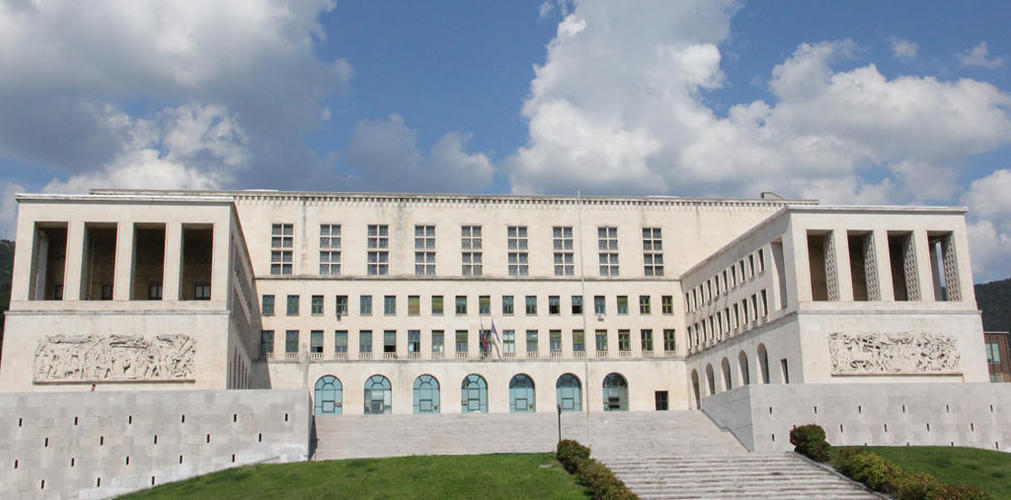
Three research projects at the University of Trieste have been awarded more than €5 million in funding from the Italian Science Fund, strengthening the institution’s position in Italy’s growing landscape of high-level scientific research.
Two of the selected projects, categorized as Advanced Grants, originate from the Department of Chemical and Pharmaceutical Sciences. They are led by Paolo Fornasiero, professor of general and inorganic chemistry and the university’s vice-rector for research, and by Federico Rosei, professor of industrial chemistry. A third project, designated as a Starting Grant, was submitted by Matteo Marinelli of the Department of Physics.
“These results confirm the quality of our recruitment efforts and the dedication of our researchers in attracting resources that will fuel innovation within our facilities and enable internationally competitive research,” Rector Donata Vianelli said in a statement.
The Italian Science Fund (FIS) supports high-level research proposals across the domains covered by the European Research Council (ERC). Grants are awarded to early-career researchers (Starting Grants), mid-career scholars (Consolidator Grants) and established scientists (Advanced Grants). Modeled on the ERC system, the program aims to strengthen fundamental research nationwide.
Now in its third edition, the fund has a total budget of €475 million. It allocates between €1 million and €2.4 million per project to proposals submitted by Italian state and non-state universities, research institutes, IRCCS medical research centers, higher education schools, and other legally recognized research organizations. About 325 projects received funding this year.
The three winning proposals from the University of Trieste span renewable energy, catalysis and quantum technologies:
- PhotoElectrocatalytic smart Systems for CHEmicals and FUels production — Professor Fornasiero’s project will receive €2.3 million to develop a tandem catalytic system in which the photocatalytic conversion of biomass-derived compounds into industrially relevant products is paired with an electrocatalytic process capable of switching between hydrogen evolution and the hydrogenation of unsaturated organic molecules.
- Study of model photocatalysts to optimize water splitting — Professor Rosei’s project, awarded €1.9 million, aims to analyze model systems that can shed light on the mechanisms underpinning photocatalytic water splitting, a key process in renewable fuel production.
- Tweezer-based quantum Repeater InterConnection — Professor Marinelli’s project will receive €1.1 million to develop an experimental platform for next-generation quantum networks. The work focuses on creating a modular architecture using ytterbium atoms trapped in optical tweezers and interfaced with an optical resonator to generate atom-photon entanglement, a core component of future quantum internet technologies.
University officials said the funding represents a significant step forward for Trieste’s growing research ecosystem.