











by InTrieste
A major archaeological exhibition at the National Archaeological Museum of Aquileia continues to draw strong public interest, welcoming more than 1,200 visitors on January 4 alone, during Italy’s monthly free-admission Sunday. This week, the show expanded further with the arrival of two rare bronze statues whose journey back to public view has been as remarkable as their ancient origins.
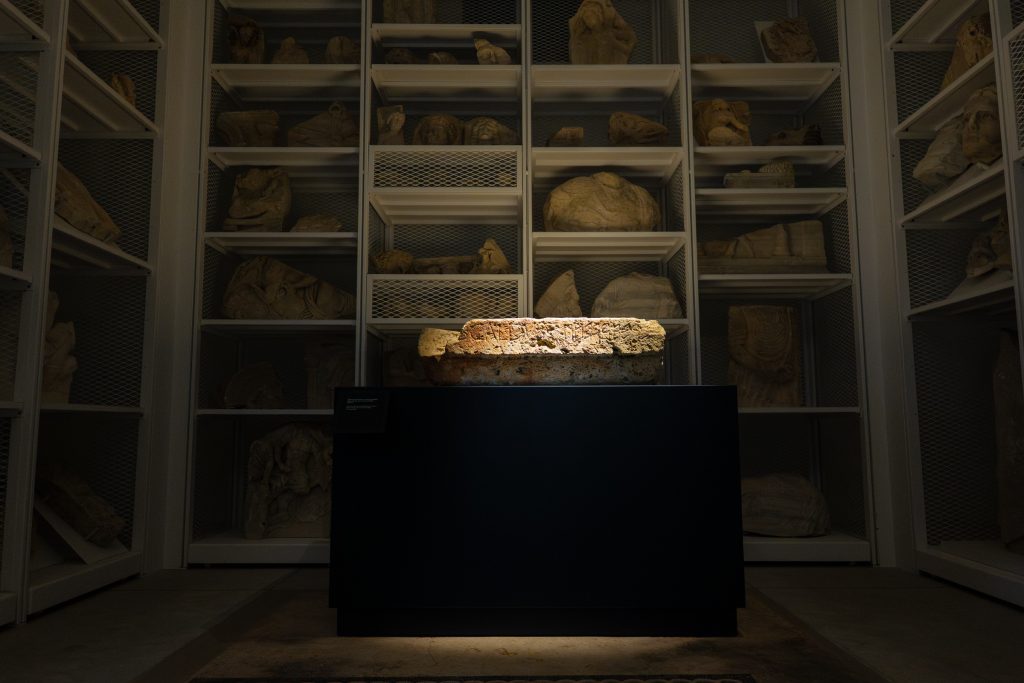
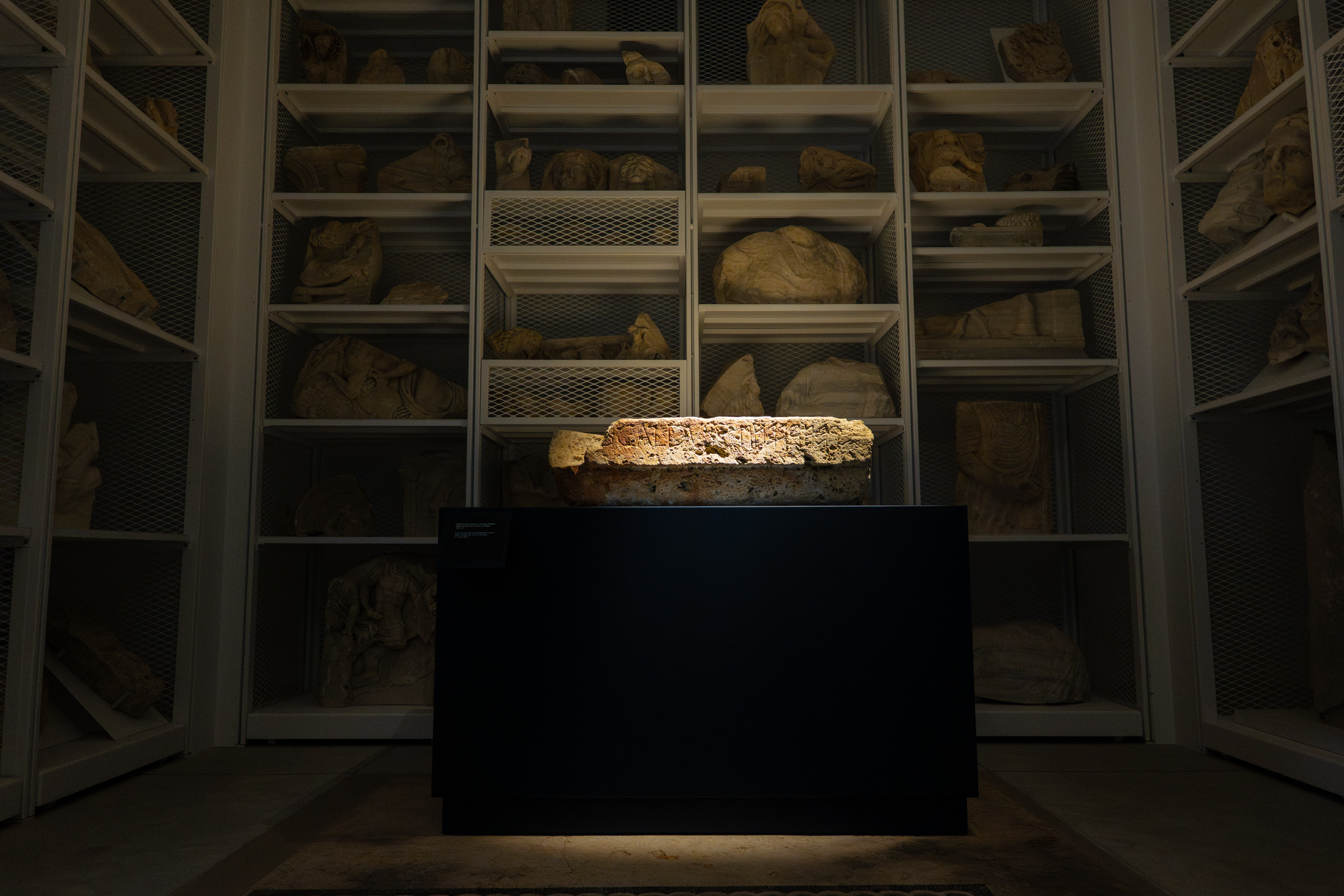
Since January 15, the exhibition, “The Gods Return: The Bronzes of San Casciano,” has been enriched by the addition of two life-size bronze figures depicting a father and son. The statues, dating to the Etruscan-Roman period, were once the objects of a clandestine excavation and subsequently vanished into the international antiquities market. Their whereabouts remained unknown for years until they were recovered in separate operations and returned to Italy through the efforts of the Carabinieri Command for the Protection of Cultural Heritage.
Because of the complexity of their recovery, the two bronzes were first exhibited together only recently, remaining on display until January 11 at the Museum of Rescued Art in Rome, housed in the Octagonal Hall of the Baths of Diocletian. Their transfer to Aquileia now completes the narrative arc of an exhibition devoted to one of the most significant archaeological discoveries in Italy in recent decades.
The statues are believed to originate from the territory of ancient Chiusi or Perusia, modern-day Perugia. What makes them especially rare is the presence of inscriptions in the Etruscan language on each figure. These inscriptions not only preserve personal names — Aule and Larth — but also establish a familial relationship between them. The younger figure identifies himself as Aule Ceisina, “son of Larth,” leaving little doubt as to their connection.
Both figures are shown wearing togas, an element that situates them firmly within the cultural and artistic world shared by the other bronzes recovered from the thermal sanctuary at San Casciano dei Bagni. One of the two statues — the younger togatus — had already been included in the first edition of “The Gods Return,” presented at the Quirinal Palace in 2023. Until now, however, father and son had never been exhibited together in the same venue.
Their reunion occurred for the first time during the exhibition “New Recoveries,” curated by Sara Colantonio and Maria Angela Turchetti at the Museum of Rescued Art in Rome. That exhibition was the result of a broad institutional collaboration involving Italy’s Ministry of Culture, the Carabinieri’s cultural heritage unit and the National Roman Museum. Their arrival in Aquileia marks the next chapter in an evolving scientific and curatorial project.
For the organizers, the addition of the two bronzes represents more than an expansion of the display. It underscores the role of archaeological research and cultural heritage protection in reconstructing fragmented histories that might otherwise be lost. The statues of Aule and Larth, once separated and removed from their context, now stand together again, offering visitors a rare and tangible link between personal identity and collective memory in the ancient world.
The exhibition, which opened on December 4, centers on extraordinary discoveries made at the thermal sanctuary of San Casciano dei Bagni, in the province of Siena. Excavations at the site have uncovered the largest known votive deposit of bronze statues and objects from Etruscan and Roman Italy. More than 300 artifacts have been recovered during excavation campaigns conducted between 2022 and 2024 at the Bagno Grande site.
The excavations are led by the University for Foreigners of Siena in collaboration with Italy’s archaeological authorities and the municipality of San Casciano dei Bagni. The finds — remarkably preserved after centuries submerged in thermal waters — have reshaped scholarly understanding of religious practices, healing cults and artistic production in central Italy between the second century B.C. and the first century A.D.
Curated by Massimo Osanna and Jacopo Tabolli, the exhibition in Aquileia is promoted by the Ministry of Culture and organized by the Directorate-General for Museums, in partnership with the National Archaeological Museum of Aquileia and the Regional Directorate of National Museums of Friuli Venezia Giulia. Additional collaborators include Italy’s Directorate-General for Archaeology, Fine Arts and Landscape, the relevant regional superintendencies, the University for Foreigners of Siena and the municipality of San Casciano dei Bagni.
Visitors can now also purchase the exhibition catalog at the museum’s bookshop. Published by Treccani and edited by Osanna and Tabolli, the volume focuses on the Aquileia edition of the exhibition and will be officially presented on February 13 during a public study day devoted to ongoing research activities. The event will be hosted at the National Archaeological Museum of Aquileia and organized by the University for Foreigners of Siena.
“The Gods Return: The Bronzes of San Casciano” is open to the public from Tuesday through Sunday, from 10 a.m. to 7 p.m. Tickets are available online through the Musei Italiani website and app, as well as at the museum’s ticket office. Guided tours are offered by PromoTurismo FVG on Saturdays, Sundays and public holidays at 10 a.m. and 3 p.m.
For scholars and the general public alike, the exhibition offers not only a rare encounter with ancient masterpieces, but also a case study in the modern recovery, preservation and interpretation of cultural heritage — a process in which patience, institutional cooperation and historical rigor continue to play a decisive role.