












by Maximiliano Crocamo
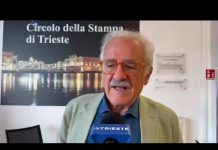
Interview: Mauro Bordin, president of the regional council
The coming year will mark the 50th anniversary of the 1976 earthquake, a defining event in the modern history of Friuli Venezia Giulia, and regional authorities are preparing a series of official commemorations to reflect on its long-term impact.
The Regional Council will take a leading role in the anniversary, according to its president, Mauro Bordin, who outlined priorities for 2025 during the council’s traditional end-of-year briefing. Central to the commemorations will be a special session of the Regional Council scheduled for May 6, with hopes that President Sergio Mattarella will attend.
Beyond the symbolic weight of the anniversary, the year ahead is also notable for the scale of public spending approved by the regional government. The total budget for 2025 amounts to €8 billion, an increase of 8 percent compared with 2024. Of this, €6.5 billion is contained in the annual budget law alone.
As in previous years, health care accounts for the largest share of spending, with €3.7 billion allocated to the sector. Regional officials described the figure as a necessary response to rising costs and structural pressures on the public health system.
On the legislative front, the council’s activity over the past year has been more limited in scope. A total of 32 bills were introduced, of which 20 were approved. Only four of those measures originated from the council itself, representing about one-fifth of the total. Opposition parties pointed to the figure as evidence of a growing institutional imbalance, arguing that legislative initiative is increasingly concentrated in the hands of the regional executive rather than the elected assembly.
Council leaders, however, emphasized that parliamentary work extends beyond the passage of laws. Particular attention was given to the role of the council’s oversight and guarantee bodies, including the regional anti-mafia observatory, which has focused much of its recent work on illicit trafficking routes that pass through Friuli Venezia Giulia, a region seen as strategically exposed because of its geographic position.
Concerns were also raised about the state of the prison system. Enrico Sbriglia, president of the regional authority for detainees’ rights, highlighted the fragile condition of prison infrastructure, both locally and nationally. His remarks came just days after an inmate escaped from the Coroneo prison in Trieste, an episode that renewed scrutiny of overcrowding, aging facilities, and staffing shortages.
Together, the anniversary of the 1976 earthquake, the expansion of public spending, and ongoing institutional debates underscore a year that regional leaders see as both commemorative and consequential. As Friuli Venezia Giulia looks back on a moment that reshaped its social and physical landscape, it also faces familiar challenges over governance, public services, and security that will define its path forward.