









by Nina Vaclavikova
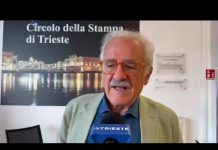
Interviews: Deborah Arbulla, conservatrice paleontologa del Museo di Storia Naturale, Roberto Micheli della Soprintendenza Archeologia, Belle Arti e Paesaggio del Friuli Venezia Giulia
The seventh edition of the Palæomovies Film Fest, a documentary festival dedicated to human prehistory, was presented Thursday morning at the Civic Museum of Oriental Art. The event will take place December 11–14, 2025, at the city’s Museum of Natural History.
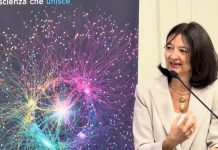
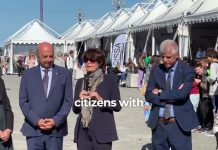
City Councillor for Cultural Policies Giorgio Rossi joined representatives from the Friuli Venezia Giulia Superintendency, the Museum of Natural History, and the Municipal Scientific Museums to introduce this year’s program. The festival, he noted, has “grown steadily over the years,” drawing audiences interested in the most recent discoveries in paleontology, archaeology, and human evolution.
Founded to communicate research on evolution, paleoanthropology, and the development of early societal structures, Palæomovies offers screenings and expert-led discussions intended to make complex scientific themes accessible to a wide audience. “These topics may appear specialized, but documentaries—especially with subtitles—help bring people closer to themes such as human evolution and anthropology,” said Patrizia Fasolato, who coordinates the city’s scientific museums and oversees the project.
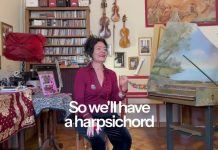
This year’s program highlights prehistoric and contemporary shamanism, the origins of music and art, violence in the Neolithic age, and a high-altitude archaeological mystery. Two recent Italian productions dedicated to archaeological outreach will also be shown. Over four days, visitors are invited to travel back through millennia to explore the customs, beliefs, and social behaviors of early human communities.
As in past editions, the festival features presentations from archaeologists, anthropologists, and museum curators. Among them are Antonio Paolillo, director of the Museum “La Terra e l’Uomo” in Treviso; Fabio Martini of the University of Florence; Marco Milella of the University of Pisa; and several researchers from the Cultural Association Amici di Castellaro. Stefano Bianchi of Trieste’s Civic Theater Museum C. Schmidl will also participate.
Admission to all events is free until capacity is reached.
A new feature of this edition is an interactive children’s visit on December 14, during which young participants will try to distinguish original artifacts from reproductions displayed throughout the museum. The activity, organized by CoopCulture, costs €8 plus museum admission (free for children under six).
The festival is organized by the Municipality of Trieste and the Friuli Venezia Giulia Superintendency, curated by archaeologist Roberto Micheli with the collaboration of paleontologist Deborah Arbulla. Project coordination is by Patrizia Fasolato and municipal administrator Andrea Reganzin. Additional support is provided by the Friuli Venezia Giulia Region, while the cultural association La Cappella Underground manages technical services and film research.
The full program spans four days and includes screenings of international documentaries—from France, Germany, Italy and beyond—exploring early music, Paleolithic art, Neolithic conflict, high-altitude archaeology, and Sardinia’s monumental stone “Giants” of Mont’e Prama.
The Museum of Natural History is accessible via public transportation, with nearby parking available. Wheelchair users may access the museum directly through the forecourt entrance on Via dei Tominz 4.