










by Maximiliano Crocamo
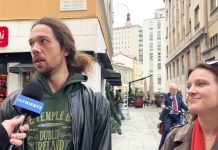
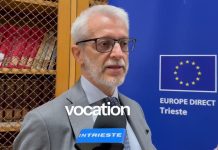
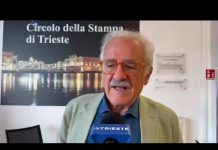
Interviews: Fabio Scoccimarro, Councilor for Environment, Energy, and Sustainable Development; General Raffaele Manicone, commander of the Raggruppamento Carabinieri Biodiversità (the Carabinieri Biodiversity Group); Guido Corso, RAI director for Friuli Venezia Giulia
Planting a tree is often seen as an investment in the future, but in a public garden overlooking one of Trieste’s busiest thoroughfares, it has also become an act of remembrance.
Twenty-two young trees — including maple, Judas tree, hawthorn, cherry and dogwood — were recently planted in the public garden of Piazzale Rosmini, a green space dedicated since 2014 to Marco Luchetta, Alessandro Ota, Dario D’Angelo and Miran Hrovatin, journalists and television operators who lost their lives while reporting from conflict zones in Mostar and Mogadishu.
The initiative marked the fourth stop of “Rai Coltiva il Futuro” (“Rai Cultivates the Future”), a project promoted by Rai for Sustainability. The program is part of a broader environmental campaign led by Italy’s Carabinieri, “Un Albero per il Futuro” (“A Tree for the Future”), which initially set a goal of planting 50,000 trees over three years and now aims to reach 100,000 by 2028.
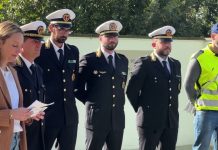
The trees, all species commonly found in the region, were supplied by nurseries operated by the Carabinieri Command for Biodiversity Protection. The planting site was selected in collaboration with the Municipality of Trieste.
For organizers, the event carried both environmental and symbolic significance.
Holding a hawthorn sapling before it was planted, Alberto Veracini of the Carabinieri Biodiversity Department said the choice of species reflected the local landscape. More importantly, he said, the trees serve as a reminder of the need to pay greater attention to the natural environment.
The ceremony also underscored a connection between sustainability and collective memory.
“This square holds special meaning for us,” said Guido Corso, director of Rai’s Trieste headquarters. Referring to the four journalists commemorated by the garden, he said the planting represented a way of remembering “the seed they planted” through their dedication to public service and their commitment to informing the community.
Beyond its commemorative value, organizers emphasized the educational role of the initiative. Trees and green spaces, they noted, can help illustrate the biological processes that sustain everyday life.
Each leaf, Veracini observed, functions as a small biochemical laboratory, producing the oxygen that makes life possible.
As the newly planted trees take root in the years ahead, they are expected to provide shade and greenery to the neighborhood. For those involved in the project, however, they also stand as living reminders of both environmental stewardship and the enduring legacy of journalists who lost their lives while reporting the news.