



















by InTrieste
International visitors are increasingly fueling tourism growth in Friuli Venezia Giulia, regional data show, as the region continues to expand its appeal while largely avoiding the overtourism seen elsewhere in the country.
The figures were presented to a regional council commission by Iacopo Mestroni, director of the regional tourism agency PromoTurismoFVG, alongside the tourism councilor Sergio Emidio Bini during a review of publicly owned regional entities.
Foreign Demand Drives Growth
Tourist arrivals rose 5.4 percent in 2024 while overnight stays increased 2.9 percent. The gains were driven primarily by foreign visitors, whose arrivals climbed 8.2 percent compared with modest growth among domestic travelers.
International guests now account for most tourism activity, with roughly 1.8 million of the region’s 3.1 million arrivals coming from abroad. The largest groups came from Austria, Germany and Hungary.
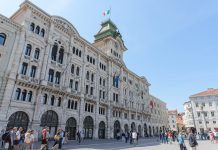
Cities performed strongly, particularly Trieste, where arrivals increased sharply among both Italian and foreign visitors.
Diversifying Beyond Seasonal Tourism
Officials say part of the growth reflects a long-term effort to expand beyond traditional summer beach tourism and winter skiing.
Mountain destinations saw revenues exceed projections, helped by stronger summer activity, although results remain sensitive to weather conditions. Investments have also focused on infrastructure and relatively affordable ski pass pricing aimed at supporting families and local economies.
Continued Expansion in 2025
The upward trend continued into 2025, when the region recorded about 11 million overnight stays — up 6.5 percent from the previous year and more than 21 percent above pre-pandemic levels.
Tourism-related revenues are projected to reach about €100 million, nearly doubling from 2022 levels. Winter tourism has also strengthened, with ski resort visits rising more than 20 percent compared with the 2017–18 season.
Mr. Bini said increased public investment in PromoTurismoFVG had helped drive growth despite rising labor and energy costs.
Growth Without Overtourism
Regional officials emphasized that, despite rising visitor numbers, Friuli Venezia Giulia has so far avoided the severe overcrowding affecting many major Italian destinations.
Authorities have promoted slower forms of tourism — including hiking, cycling and cross-border travel initiatives with neighboring Austria — while investments in airport infrastructure and airline partnerships have improved accessibility.
Taken together, officials say the data point to a strategy focused not only on growth, but on balancing economic benefits with sustainability and quality of life for residents.