








by InTrieste
One of Europe’s most quietly influential film festivals opens this Friday, January 16, at 7.30 pm with a portrait of a writer whose name has become shorthand for the anxieties of modern life.
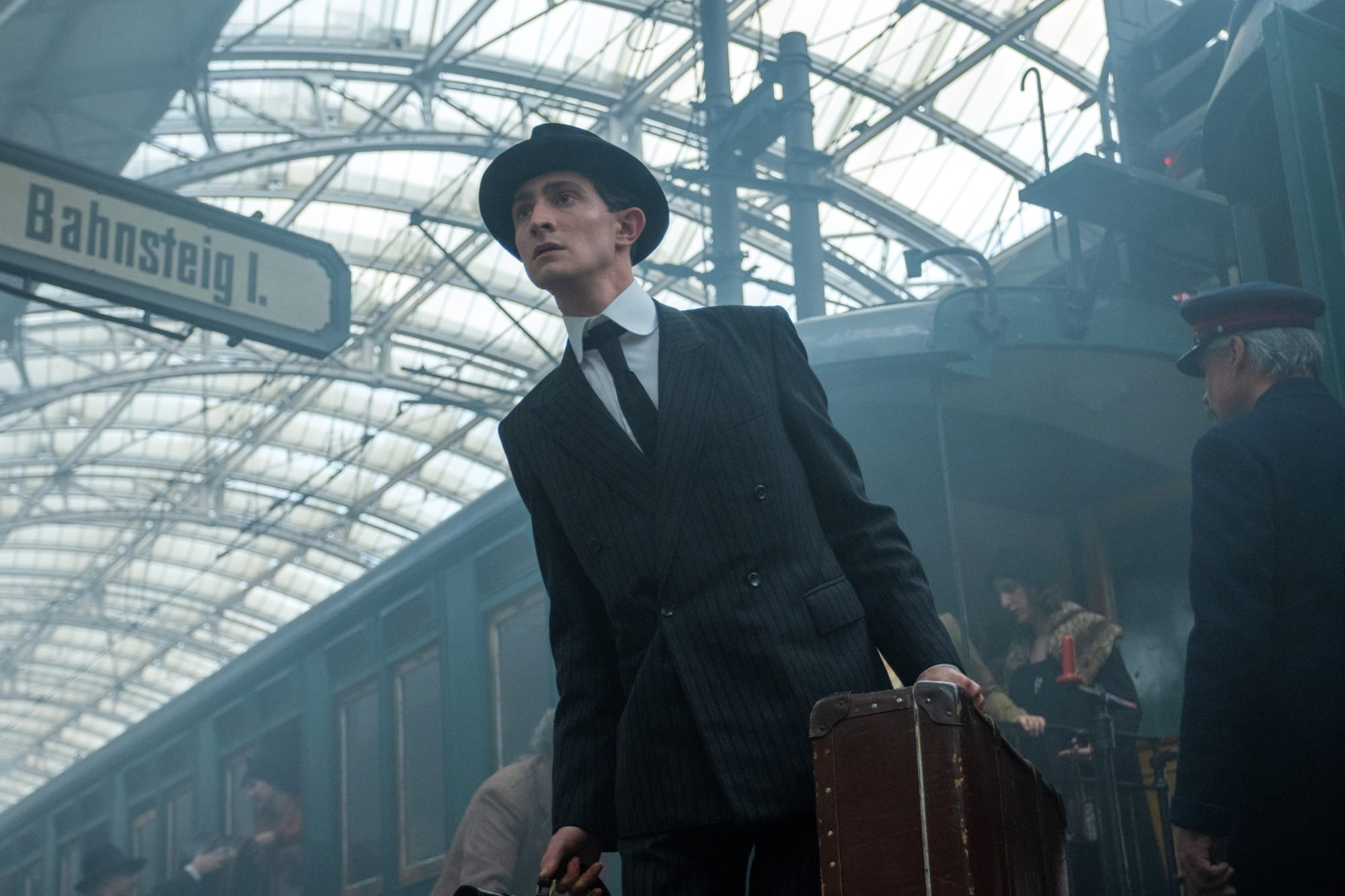
The Trieste Film Festival, Italy’s longest-running and most important showcase for cinema from Central and Eastern Europe, begins its 37th edition on Friday with the Italian premiere of “Franz,” a biographical film about Franz Kafka by the Polish director Agnieszka Holland. The festival runs through Jan. 24, continuing a three-decade tradition of positioning Trieste as a cultural bridge between East and West.
The opening night screening will take place at Teatro Miela, with two showings at 7:30 p.m. and 10 p.m. Admission is free, with priority given to invited guests.
A Portrait of Kafka, and of His Time
“Franz” is Holland’s most ambitious project to date, following her 2023 film “Green Border,” which won a special jury prize at the Venice Film Festival. The new film, distributed in Italy by Movies Inspired, has already had its international premieres in Toronto and San Sebastián and was selected by Poland as its submission for the Academy Awards’ 2026 Best International Feature category. It also received three nominations from the European Film Awards, including for best actor, costume design and hair and makeup.
Rather than offering a conventional literary biopic, the film traces Kafka’s life through a mix of historical detail and psychological interpretation. It follows him from his childhood in late-19th-century Prague through his final years in postwar Vienna, depicting a figure shaped by contradiction: a disciplined civil servant who felt trapped by bureaucracy; an introvert who expressed himself most fully through letters; and a writer whose private anguish became the language of modern alienation.
The film also explores Kafka’s relationships, including his fraught bond with his authoritarian father, his friendship with the writer Max Brod and his complex romantic ties to Felice Bauer and Milena Jesenská.
A Festival with a Mission
Founded in 1989, just months before the fall of the Berlin Wall, the Trieste Film Festival has long served as a laboratory for what it calls the “New Europe,” introducing Italian and Western European audiences to filmmakers from countries once separated by political and cultural barriers. Over the next nine days, the festival will present feature films, documentaries and short films, along with master classes and discussions with both established directors and emerging voices.
While larger festivals like Berlin or Venice tend to dominate headlines, Trieste has built its reputation on careful curation and regional focus, offering a sustained look at the storytelling traditions and social questions of Central and Eastern Europe.
Opening with Kafka, a writer born in the multi-ethnic heart of the old Austro-Hungarian Empire, is no coincidence. His life and work, shaped by displacement, linguistic tension and political uncertainty, mirror many of the historical forces that continue to define the region whose cinema Trieste has championed for more than three decades.
In that sense, “Franz” is not just the story of a single writer, but a symbolic starting point for a festival that has made a mission of exploring Europe’s shifting identities through film.