




by InTrieste
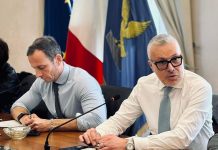
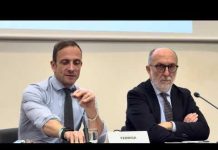
At his year-end press conference, the governor of Friuli Venezia Giulia, Massimiliano Fedriga, highlighted what he described as sustained economic growth and long-term planning across key sectors, underscored by the region’s latest budget.
Fedriga noted that the regional budget has increased by 58 percent since 2019, attributing the growth to the region’s reliance on its own resources. “Friuli Venezia Giulia has grown,” he said, emphasizing that the region’s financial autonomy allows it to continue guaranteeing funding for public policies. He also cited Moody’s ratings, which place Friuli Venezia Giulia alongside Lombardy, as evidence of financial stability.
The budget includes multi-year investments in infrastructure and environmental risk mitigation, notably in hydrogeological projects spanning 2018 to 2025. Fedriga described these initiatives as generating both safety and economic returns.
Culture, innovation, and tourism were central topics. Fedriga highlighted plans to position Gorizia as a hub for digital art and cited international visibility, including Italy’s pavilion at a recent global event in Japan, as an indicator of the region’s cultural appeal. He also emphasized quality-focused tourism, noting that accommodations and services will be developed to meet higher standards. A new regional communication campaign is planned for 2026.
Health reform is also on the agenda. Fedriga stressed that changes to the regional healthcare system will require several years to implement, focusing on continuity rather than rapid, politically driven adjustments.
Education and social policy remain key priorities. Fedriga highlighted full implementation of the national GOL employment program and support for families, including monthly allowances of €500 for mothers under 30. Councilor Alessia Rosolen, responsible for education and research, described this family bonus as “one of the highlights of the budget for years to come,” noting its potential impact on supporting younger families.
Tourism Councilor Sergio Bini said the past year has been “incredible” for Friuli Venezia Giulia in terms of international interest and promotion, reflecting the region’s growing visibility abroad.
Looking ahead, Fedriga outlined milestones including the 50th anniversary of the 1976 Friuli earthquake and the return of directly elected provincial governments in 2026. He also mentioned that €95 million was allocated in 2025 to municipalities for public-interest projects, with funds earmarked exclusively for their designated purposes.
On fiscal matters, Fedriga noted that Friuli Venezia Giulia exercised its autonomy by applying the maximum 0.7 percent tax rate on second-home purchases. He concluded by emphasizing that stabilized resources will allow continued investment across sectors, thanking his team and regional workers for their efforts while acknowledging that debate is a normal part of governance.