











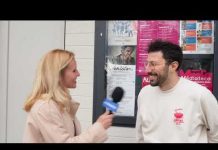

report by Nina Vaclavikova
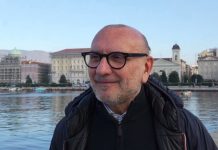
Interview: Caterina de Gavardo, Trieste councilor for urban security policies; Marco Goriani, Deputy Commissioner of the Local Police
City officials in Trieste on Friday presented the results of the second phase of Rioni Sicuri (“Safe Neighborhoods”), a local public safety initiative aimed at strengthening the presence of municipal police in residential districts and improving communication between citizens and city authorities.
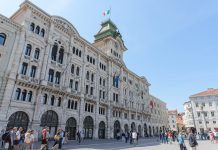
The review was held at City Hall’s Sala Giunta and brought together municipal leaders and police representatives, including Caterina de Gavardo, the city councilor responsible for urban security policies; Donatella Colarossi, commissioner of the local police and head of proximity policing; Marco Goliani, deputy commissioner and coordinator of the proximity unit; and Salvatore Porro, president of the City Council’s Sixth Commission.
Launched in response to requests from residents and neighborhood councils, Rioni Sicuri was designed to address a recurring concern expressed in early 2025: the desire for a more visible and accessible police presence across the city’s districts. The program centers on the deployment of a mobile police office staffed by the Proximity Unit of the Local Police, operating twice a week—on Wednesdays and Saturdays—in different neighborhoods.
“Our goal was to respond concretely to what citizens were asking for,” Ms. de Gavardo said. “The project was conceived to strengthen the perception of safety, build trust between residents and the Local Police, and make it easier for people to speak directly with officers in their own neighborhoods.”
Beyond safety concerns, the initiative also served as a point of contact for residents seeking assistance with documentation or wishing to report issues that often fall under the responsibility of other municipal departments. According to city officials, the physical presence of police officers in neighborhood squares and high-traffic areas proved particularly effective in encouraging dialogue.
The program unfolded in two stages. During the first phase, in May and June, the Local Police conducted 26 listening sessions, totaling 87 hours of on-site presence. The second phase, held in the fall, included 18 additional days of activity, amounting to 54 hours.
Over the course of both phases, the mobile unit visited a wide range of areas, from outlying neighborhoods such as Roiano, San Luigi, Valmaura, Altura, Cattinara and Opicina to central districts including Barriera, Cavana and Largo Bonifacio. City officials said this broad coverage was intended to assess how the initiative would be received in both residential and commercial parts of Trieste.
Some locations stood out for particularly strong participation. Morning sessions in Borgo San Sergio and near the church in Roiano, for example, attracted a steady flow of residents, reflecting what officials described as a high level of community engagement.
Despite the positive response, the city acknowledged that not all neighborhoods were reached. Officials encouraged residents to suggest additional areas that might benefit from future visits. “We are fully available to the community,” Ms. de Gavardo said, noting that citizen feedback will play a key role in shaping the next phase of the project.
Looking ahead, the municipality plans to relaunch Rioni Sicuri in the spring, potentially with adjustments based on lessons learned. Among the options under consideration is extending the service into the afternoon, a change intended to engage different age groups. Some neighborhoods, including San Giacomo and Borgo San Sergio, are expected to be included again, while others—such as Ponziana, the area around the city fairgrounds, pedestrian zones, public gardens and possibly the Giardino Pubblico—may be added for the first time.
The initiative has also benefited from collaboration with other public entities. In the Melara district, activities were supported by ATER, the regional public housing authority, which provided logistical assistance and technical staff.
Ms. de Gavardo noted that while many of the issues raised by residents fall outside the direct mandate of the Local Police, the presence of officers often serves as a gateway to broader municipal problem-solving. “When people see the police, they bring forward a wide range of concerns,” she said. “Our role is to offer concrete, thoughtful responses and ensure those concerns reach the appropriate offices.”
Commissioner Colarossi emphasized the importance of continued public input, particularly in identifying areas where residents feel most vulnerable. Elderly citizens, she said, often benefit the most from a consistent and visible police presence.
City officials described the second phase of Rioni Sicuri as a constructive step toward more community-oriented policing, with further refinements expected as the program evolves.