





















report by Nina Vaclavikova
On a warm summer evening, we wandered through downtown Trieste to see how locals in Friuli Venezia Giulia spend their nights. What we found was not a city of packed dance floors or booming nightclubs, but one where conversation, open-air cafés and historic piazzas have become the center of social life.
Nightlife in Trieste is far from disappearing. Instead, it has evolved. Traditional clubs, once a staple of weekend entertainment, have gradually given way to a more relaxed culture centered on aperitivo, neighborhood bars and evenings spent outdoors. Economic pressures, changing lifestyles and shifting priorities among younger generations have transformed the city’s after-dark rhythm.
The heart of Trieste’s social scene beats in its historic center. As dusk settles, the cobblestone streets of Cavana and Piazzetta Barbacan fill with university students and young professionals who gather around small tables or stand outside bars with glasses of local wine or craft beer. The atmosphere is lively but understated, with conversations flowing more freely than loud music.
A short walk away, Via Torino and Via San Nicolò offer another glimpse into the city’s evening culture. Bars spill onto the sidewalks, serving cocktails to crowds that linger well into the night. Rather than moving from club to club, groups often spend hours in a single place before strolling to another nearby venue, creating a distinctly pedestrian nightlife experience.
Further uphill, Viale XX Settembre remains a favorite gathering place for students. Lined with arcades, cinemas, cafés and pubs, the broad avenue comes alive in the evening as friends meet after work or classes, filling outdoor terraces with conversation.
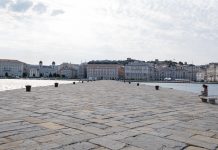
The season plays a defining role in the city’s nightlife. During the warmer months, much of Trieste’s social life shifts outdoors. Along the Barcola waterfront, hundreds of people gather on the seawall overlooking the Adriatic Sea, sharing drinks, listening to music and watching the sun disappear beneath the horizon. Beach clubs and temporary outdoor venues frequently host concerts and cultural events, giving the city a festive atmosphere that lasts well into late summer.
Winter tells a different story. As temperatures drop and the Bora wind sweeps through the city, outdoor gatherings become less common. The social scene retreats indoors, concentrating in traditional pubs, cafés and wine bars that provide warmth and familiarity rather than high-energy entertainment.
The transformation reflects broader social trends across Friuli Venezia Giulia. Many younger residents are embracing healthier lifestyles, placing greater emphasis on fitness, outdoor activities and earlier social gatherings rather than late-night drinking. Aperitivo, with its emphasis on conversation and moderation, has become increasingly popular.
At the same time, demographic changes continue to shape the city. Like many parts of Italy, Trieste has experienced the effects of a “brain drain,” with many young adults leaving in search of career opportunities elsewhere in Europe. A smaller youth population inevitably means a quieter nightlife than in larger Italian cities such as Milan or Rome.
Public safety has also influenced evening habits. Recent discussions about disturbances in parts of the city center and around the railway station have prompted increased police attention and encouraged many residents to remain within familiar neighborhoods or well-frequented public spaces.
Yet despite these challenges, Trieste’s evenings remain unmistakably vibrant. The city has simply exchanged crowded dance floors for bustling piazzas, historic alleyways and waterfront promenades where conversation takes center stage.
For visitors expecting an all-night party destination, Trieste may come as a surprise. But for those seeking an authentic glimpse into contemporary Italian social life, the city’s slower, more intimate evenings offer something equally compelling: a reminder that nightlife is not only measured by how late people stay out, but by how they choose to spend their time together.