














by InTrieste
On April 25, Italy celebrates Festa della Liberazione, or Liberation Day, marking the country’s liberation from Nazi occupation and Fascist rule at the end of World War II.
A national public holiday, Liberation Day is observed across Italy with ceremonies, speeches and public gatherings honoring the resistance movement and the end of dictatorship. Schools and government offices remain closed for the day.
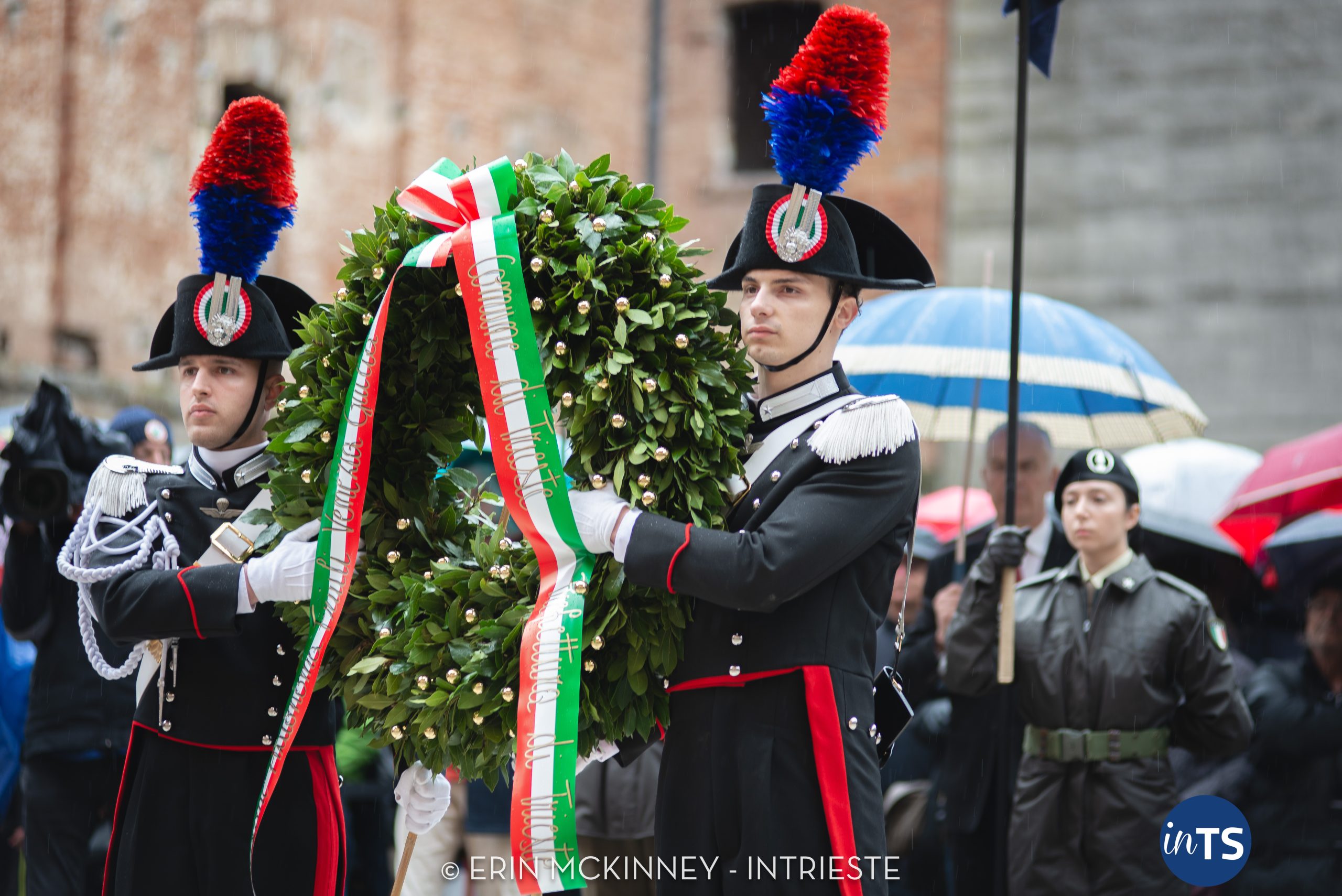
In Trieste, the annual commemoration has traditionally centered on a solemn ceremony at the Risiera di San Sabba, the only Nazi extermination camp on Italian soil. This year, for the first time, that observance is being accompanied by a public march through the city, with music performed by local groups.
The new initiative was organized by the Comitato 25 Aprile, a coalition of 38 associations including the Associazione Nazionale Partigiani d’Italia, known as Anpi.
“The Risiera has its own sacredness, which does not allow for festive demonstrations. We wanted to do something joyful to celebrate Liberation,” said Fabio Vallon, president of Anpi Trieste.
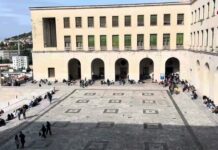
The procession is set to conclude in Piazza Unità d’Italia, where speakers will share testimonies focused on welcome, integration and historical memory. Organizers are also highlighting the work of Anpi’s archive, which preserves documents ranging from partisan membership records to materials from the National Association of Former Deportees, along with more recent donations.
“It is constantly being updated,” Vallon said, noting that private donations continue to expand the collection.
Among the archive’s holdings is a photograph of the partisan fighter Stanka Hrovatin, who died last December at the age of 96. Following a donation she made before her death, a plaque was recently installed at the Opicina shooting range bearing the names of the 71 people executed there on April 3, 1944.
The victims were killed in a Nazi reprisal after a partisan attack in which seven German soldiers died.
That same site, located in Opicina above Trieste, is now the focus of a proposal by Anpi and other civic groups to create a permanent memorial dedicated to those victims and to the broader memory of the Resistance.
For many in Trieste, the addition of a public march reflects an effort to balance remembrance with civic participation — preserving the gravity of the past while allowing younger generations to engage with Liberation Day as a living part of the city’s identity.