









by InTrieste
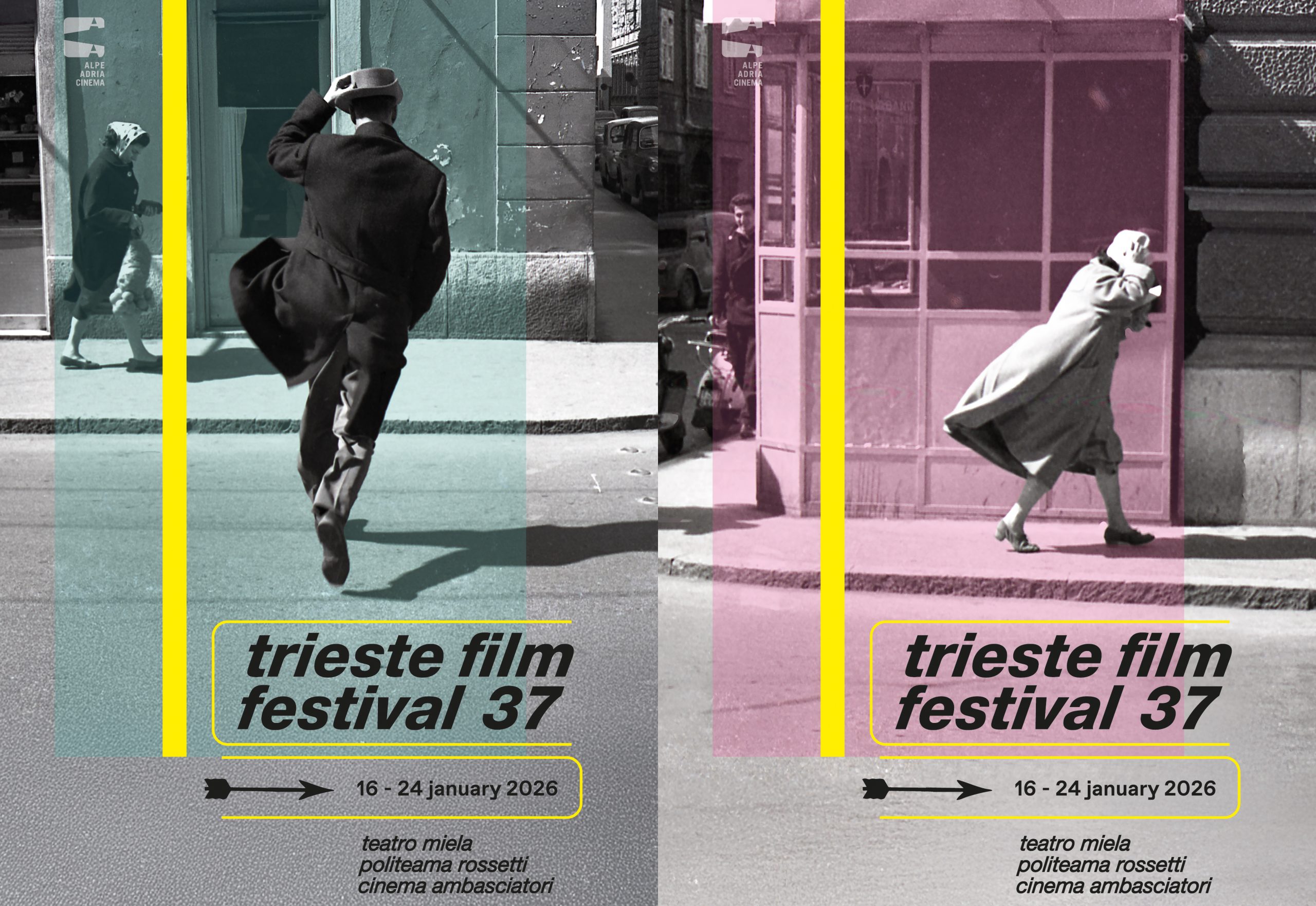
The Trieste Film Festival begins one of its most layered days early on Monday, January 19, moving fluidly between academic reflection, children’s cinema, documentary portraits, literary history, and contemporary queer storytelling. From morning symposiums to late-night screenings, the program traces how film and culture intersect across generations, borders, and identities.
The day opens at 9 a.m. with an academic conference titled Reframing European Film Festivals: Transitional Histories, Cultures and Identities, held at Sala CEI. Organized by the Italian University Film Studies Network in collaboration with the Trieste Film Festival and several major universities, the conference examines European film festivals as cultural ecosystems rather than simple exhibition platforms. Scholars explore festivals as sites where aesthetic values are shaped, professional networks are formed, and national cinemas circulate transnationally. The event also marks the conclusion of a nationally funded research project devoted to mapping and preserving the historical memory of Italian film festivals.
By late morning, the focus shifts from theory to young audiences. At Teatro Miela, students attend a matinée screening of Peter and His Friends Discover Nature, a restored selection of episodes from a 1960s educational series. The adventures of Peter, his companions, and a curious dachshund offer an entry point into environmental awareness, followed by an interactive discussion designed for children encountering cinema as a shared experience for the first time.
In the afternoon, the festival turns to documentary filmmaking with a trio of Slovenian works presented under the banner “Wild Roses.” The first, Body by Petra Seliškar, is a deeply personal portrait spanning two decades in the life of the director’s friend Urška, who lives with rare autoimmune diseases. Blending archival footage, conversations, and experimental imagery, the film examines illness, friendship, and artistic resilience. It is followed by Nina Blažin’s In the Silence of Life, a meditation on mortality and time, and Hanna A. W. Slak’s Blind Spot, a psychological drama from the early 2000s that explores dependency, isolation, and moral responsibility within family bonds.
Literature enters the program in parallel at Caffè San Marco, where Croatian writer Robert Perišić presents his novel The Cat at the End of the World. In conversation with journalist Walter Skerk, Perišić revisits the ancient Adriatic as a crossroads of civilizations. Set in the fourth century B.C., the novel follows a voyage from Syracuse to the island of Issa, carrying not only people and animals but the cultural foundations of Europe itself. Part historical fiction, part ecological fable, the book has become a bestseller in the Balkans and has recently been published in the United States and Mexico.
The evening returns to Teatro Miela with the Queer Visions section, opening with Bearcave, a Greek-British feature by Stergios Dinopoulos and Krysianna B. Papadakis. A story of intimacy and betrayal between two childhood friends, the film unfolds through elements of myth, domestic ritual, and emotional reckoning. Premiered in Venice and selected for the European Film Awards, it reflects the festival’s ongoing commitment to queer narratives that resist easy categorization.
Late-night screenings continue this exploration with the short film Tattoo, by Polish director Kamil Dobrosielski, and the feature Endless by Wojciech Puś. Both films foreground nonbinary and queer voices, confronting trauma, memory, and self-representation. As Puś has noted, Endless asserts the right of marginalized communities to tell their own stories, from within lived experience rather than imposed narratives.
Beyond the screenings, the festival extends into the city through a series of exhibitions. At Galleria EContemporary, Beyond Human Skin by Martina Martonsky invites visitors to rethink the human body as a shared ecosystem, shaped by invisible forms of life. At Sala Veruda, Serbian artist Živorad “Zico” Mišić presents a multidisciplinary exhibition centered on Nikola Tesla, blending graphic art and storytelling. And at Cizerouno Cavò, Yugo Logo offers a rare look at over 600 historical logos from the former Yugoslavia, revealing how graphic design helped shape a collective cultural identity.
Taken together, the day’s program reflects what has become a defining feature of the Trieste Film Festival: an insistence that cinema does not exist in isolation, but in constant dialogue with history, literature, politics, and the evolving ways communities imagine themselves—on screen and beyond it.