

















report: Maximiliano Crocamo
Interviews: Alessia Rosolen, FVG Councilor for Education and Research; Sebastiano Callari, FVG Councilor for Information Systems
The regional government of Friuli Venezia Giulia on Wednesday presented a new three-year strategy aimed at expanding the use of digital technologies and artificial intelligence in schools, extending a program first launched during the pandemic to modernize classrooms across the territory.
The plan, called Scuola Digitale, will run from the 2025–26 to the 2027–28 school years and involves 143 educational institutions, including comprehensive schools, state-recognized primary schools and upper secondary schools. The regional government has allocated €1.89 million for the initiative, which is coordinated in partnership with the Regional School Office.
Announcing the program in Trieste, Alessia Rosolen, the regional councilor for education and research, said the new phase builds on the results of the 2021–25 cycle and aligns with both Italy’s National Digital Education Plan and the European Union’s broader digital strategy.
“The goal is to continue preparing students to engage with the opportunities offered by digital technologies and artificial intelligence, while also developing the awareness and responsibility required to use them,” Ms. Rosolen said.
The new program places a stronger emphasis on classroom practice than the previous phase, which focused largely on infrastructure and connectivity. Between 2021 and 2025, the region invested more than €1.7 million to bring 109 schools onto the public regional network and ensure access to digital services.
Over the next three years, the initiative will support schools with equipment, software and learning spaces designed for digital and A.I.-assisted teaching. Planned activities include courses introducing students to artificial intelligence, projects that integrate generative A.I. into teaching, and the use of cloud-based services for virtual, augmented and mixed-reality applications.
Schools will also be offered educational visits to Insiel, the region’s in-house information technology company, including training sessions focused on cybersecurity.
Several projects launched in the previous cycle will continue, including Esploratori digitali, a program for primary schools that promotes responsible internet use and time management online, and a digital learning platform for teachers developed in collaboration with the University of Udine. A “digital well-being desk” to prevent and address cyberbullying will also remain in place.
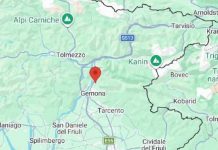
Among the 143 participating institutions are 68 comprehensive schools, 31 state-recognized primary schools and 44 upper secondary schools. The Magrini-Marchetti Institute in Gemona del Friuli has been selected, through a public call, to serve as the program’s lead school, responsible for coordinating the operational aspects of the plan.
Sebastiano Callari, the regional councillor for information systems, noted that the region had already invested €20 million to connect all schools in Friuli Venezia Giulia to the public regional network. He linked the new education program to the European Union’s goal of ensuring that at least 80 percent of the population is digitally competent by 2030.
“In Italy, people under 30 are broadly in line with the European average,” Mr. Callari said. “The challenge is to raise digital skills among those over 30 as well, and that is why we are also investing in digital facilitation centers.”
Mr. Callari also announced plans for a digital innovation hub as part of the redevelopment of Trieste’s Porto Vecchio harbor area. The hub, equipped with 5G technology, is expected to be temporarily located in Corso Cavour, at the offices of the regional information systems department, where it will offer students early experiences with immersive digital technologies.
Regional officials described the new three-year plan as a step toward embedding advanced digital tools more deeply into everyday teaching, as schools in Friuli Venezia Giulia move from building digital infrastructure to using it more fully in the classroom.