





















by InTrieste
At a primary school in Trieste’s Roiano neighborhood, a recently completed renovation has focused on a practical but often complex goal: making older public buildings accessible to everyone.
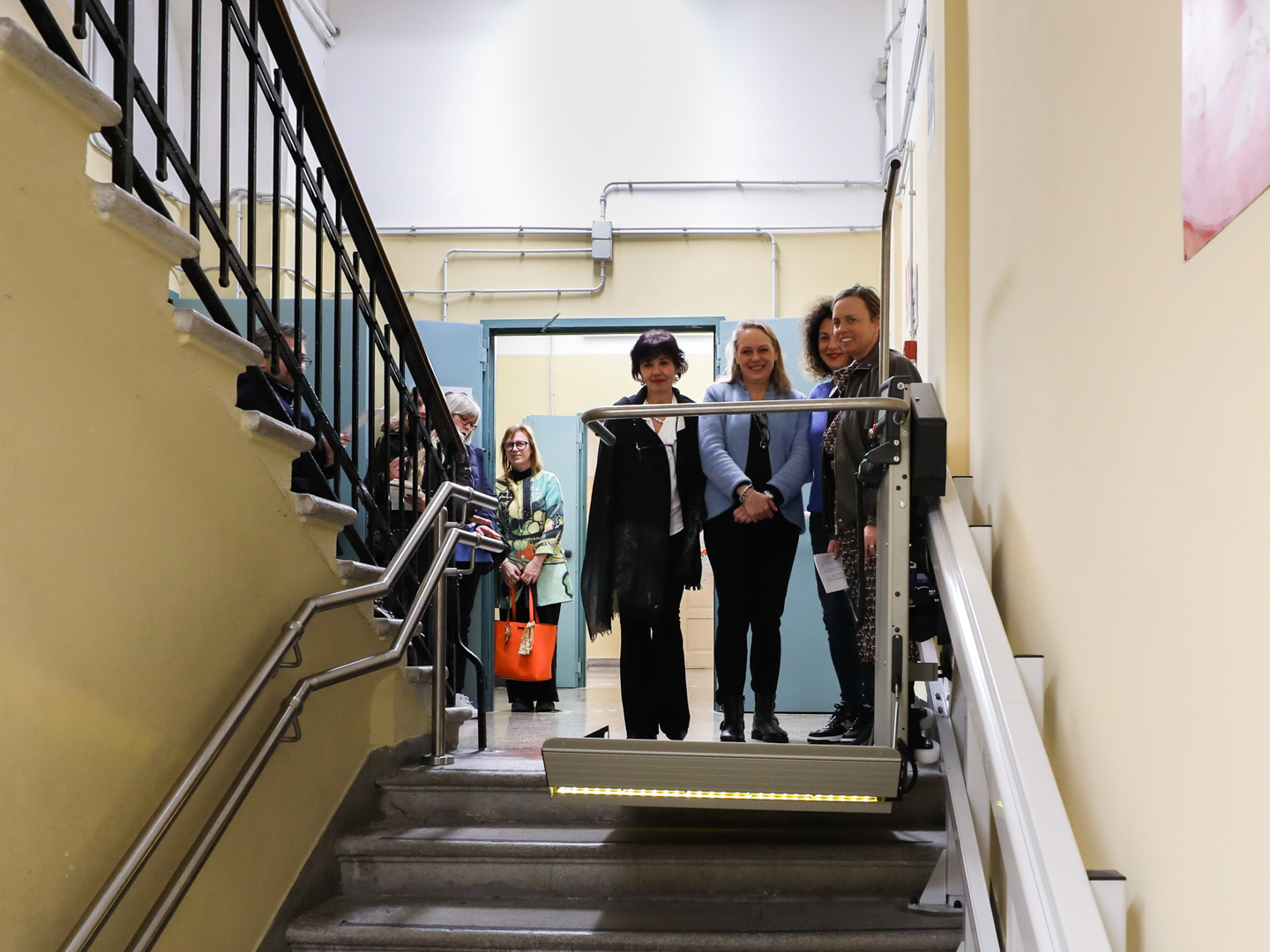
City officials on Friday presented a newly installed stairlift at the Emo Tarabochia primary school, part of a broader effort to remove architectural barriers across municipal school facilities. The intervention, carried out during the Carnival holidays to avoid disrupting classes, allows students with mobility challenges to access the building directly from the adjacent parking area.
The project, which cost about €15,000 including two years of maintenance, involved more than the installation of new equipment. Workers first removed an existing handrail and repainted the stairwell, updating the space as part of the accessibility upgrade. The work falls under a larger municipal maintenance program for primary schools in 2025.
According to Elisa Lodi, Trieste’s councillor for public property policies, the project was prompted by a specific need identified by the school: difficulty of access for a primary school student. The new system, she said, provides a direct response while reflecting a wider commitment to inclusivity in public education.
That broader effort, however, comes with challenges. Many of Trieste’s school buildings are decades old, and some are subject to architectural or historical preservation rules. Even relatively small interventions, such as installing a stairlift, can require multiple approvals and careful planning.
Still, the city has indicated it is working on a wider plan to extend similar improvements to other schools.
For staff at Emo Tarabochia, the change is already meaningful. Stefania Spagnuolo, a support teacher who helped promote the initiative, described the installation as part of a collaborative process involving school administrators, teachers and city officials. More than a technical upgrade, she said, it represents a step toward a more inclusive environment for students.
The work was carried out by local contractors under the supervision of municipal engineers, with safety coordination and design oversight handled by appointed architects. While modest in scale, the project highlights the incremental approach many cities are taking to modernize aging infrastructure—one staircase at a time.