






















by InTrieste
Newly released documents from the so-called Epstein Files, a massive collection of messages, emails, and other records connected to the late financier Jeffrey Epstein, shed light on his interests in both European real estate and politics.
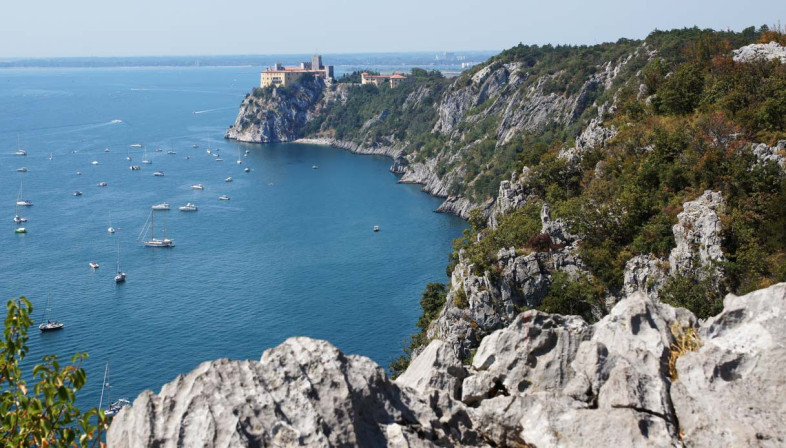
Among the revelations is Epstein’s reported interest in purchasing the Castle of Duino, a historic fortress overlooking the Adriatic near Trieste. The correspondence, which dates from 2010 to 2011, shows that Epstein explored the property through intermediaries, including Norwegian diplomat Terje Rød-Larsen and high-end real estate broker Patrick Kyd-Rebenburg.
In an email dated October 10, 2010, Rod-Larsen proposed “a castle between Trieste and Venice with a private beach,” noting that it was “an ancient house” owned by the Italian branch of the Thurn und Taxis family. The owner, referred to as a count, was seeking 20 million euros, a price described as negotiable. Subsequent messages in 2011 included a map of the castle’s grounds, discussions of travel options via Paris and Rome, and arrangements for a potential viewing. By mid-July, Rebenburg indicated that the owner was willing to entertain international offers at a higher price, raising the minimum to 30 million euros.
Emails suggest that Epstein’s trip to Trieste may have been delayed, but it is unclear whether he ever actually visited the property. Inquiries to the castle’s current ownership have not yet received a response.
The files also contain surprising references to Italian politics, particularly to Matteo Salvini, the leader of the right-wing Lega party and former interior minister. While there is no evidence linking Salvini to Epstein’s criminal sex-trafficking operations, the documents show that Epstein and his associates were closely monitoring the rise of populist, nationalist leaders in Europe.
The communications, which include millions of pages released by the U.S. Department of Justice, reveal that Epstein discussed European political developments with Steve Bannon, the American political strategist and former adviser to Donald Trump. Salvini’s name appears in more than twenty exchanges, primarily in discussions of political strategy and the potential growth of right-wing movements. Many of the mentions correspond to the period between the March 2018 Italian general election, when the League captured about 18 percent of the vote, and the European Parliament elections in May 2019, a moment of momentum for the party.
The correspondence shows Bannon outlining plans to support right-wing leaders across Europe, including Salvini, Marine Le Pen in France, and other figures in Hungary, Germany, and the United Kingdom, through Bannon’s organization, The Movement. Epstein, in turn, offered advice about the importance of in-person engagement, noting that remote influence from the United States would be insufficient.
At times, the messages speculate on potential electoral upheavals in Italy, including new general elections prompted by a strong European Parliament showing for right-wing parties. In a December 2018 exchange, Bannon proposed a scenario in which the European right could secure a parliamentary majority and then push for Italian elections, to which Epstein responded, “Damn, may God have mercy on their souls.”
The files also discuss electoral strategy and fundraising. In March 2019, Bannon noted to Epstein that he was focused on raising money “for Le Pen and Salvini so they can field full slates of candidates,” though there is no clear evidence of any funds being transferred or recorded in official party accounts. By the European elections that year, the tone of the exchanges reflected both optimism and frustration, with Salvini remaining part of the strategic calculus amid shifting political dynamics.
It remains unclear whether Epstein and Salvini ever met in person. While the files include passing references to possible travel to Rome and note that “Salvini does not speak English,” there is no concrete evidence of direct contact. The documents do underscore, however, that influential figures connected to American political strategy were closely observing Salvini’s rise, framing it as part of a broader effort to reshape the European political landscape.
Together, the files illustrate the wide-ranging scope of Epstein’s interests—from high-end European real estate to the ascent of nationalist political figures—without suggesting any illicit involvement on the part of the politicians mentioned.