
















by InTrieste
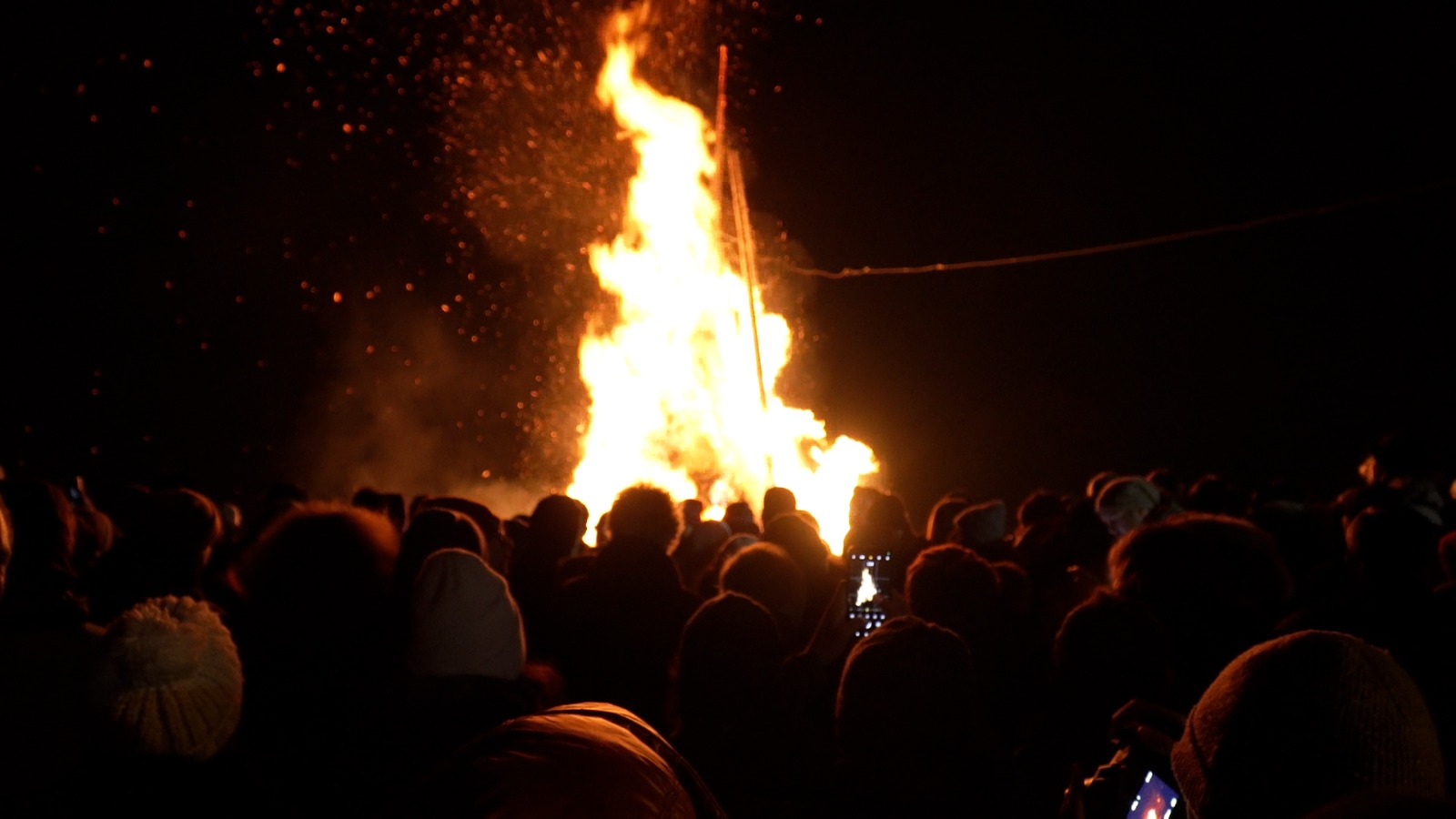
On a hill overlooking the town of Tarcento, in the region of Friuli Venezia Giulia, a towering bonfire rose into the January night, its flames flickering against the winter sky as thousands of people gathered below.
The fire, known as the Pignarûl Grant, is one of the region’s oldest Epiphany traditions. Each year, communities light ceremonial bonfires whose smoke and embers are read as signs for the months ahead — a ritual that blends folklore, agriculture and collective memory.
This year’s largest fire, built on the Coia hill near the Cjistielat site, stood about 15 meters high and served as the symbolic starting point for dozens of smaller fires lit across nearby villages. According to tradition, the direction of the smoke offers predictions about the coming year, a moment of shared anticipation that draws residents from across the region.
Speaking at the event, Barbara Zilli, the regional councillor for finance, said the ceremony reflects more than superstition. “In the ancient act of reading smoke and fire,” she said, “we find both good wishes for the new year and a strong message of community, cohesion and participation.”
The figure known as the Vecchio Venerando — a traditional character who interprets the fire’s omens — suggested that the year ahead would require collective effort, a message Zilli echoed in her remarks, emphasizing the importance of local communities in facing uncertain times.
The 2026 edition of the Pignarûl also carried added historical weight. Next year marks the 50th anniversary of the devastating Friuli earthquake of 1976, which reshaped towns across the region and led to one of Italy’s most notable post-disaster reconstruction efforts. Zilli recalled the spirit of solidarity and shared responsibility that helped rebuild Friuli and said those values remain central to the region’s identity.
The bonfire itself was constructed by local volunteers, including members of the Alpini mountain troops’ association, the Coia district committee and the town’s Pro Loco cultural group, with logistical support from the municipal administration and security services. Masked folk performers known as mascarârs added to the evening’s theatrical atmosphere.
The lighting of the Pignarûl marked the high point of a three-day festival organized by the town and its cultural associations — a tradition that has continued uninterrupted since 1928. While deeply rooted in Friulian history, the event has increasingly become a regional attraction, drawing visitors from across Friuli Venezia Giulia.
As the fire burned and the smoke drifted into the night, the spectacle offered not just a dramatic visual display but a reminder of how ancient rituals continue to shape communal life in this corner of Italy — linking past and present through flame, memory and shared expectation.