


















by InTrieste
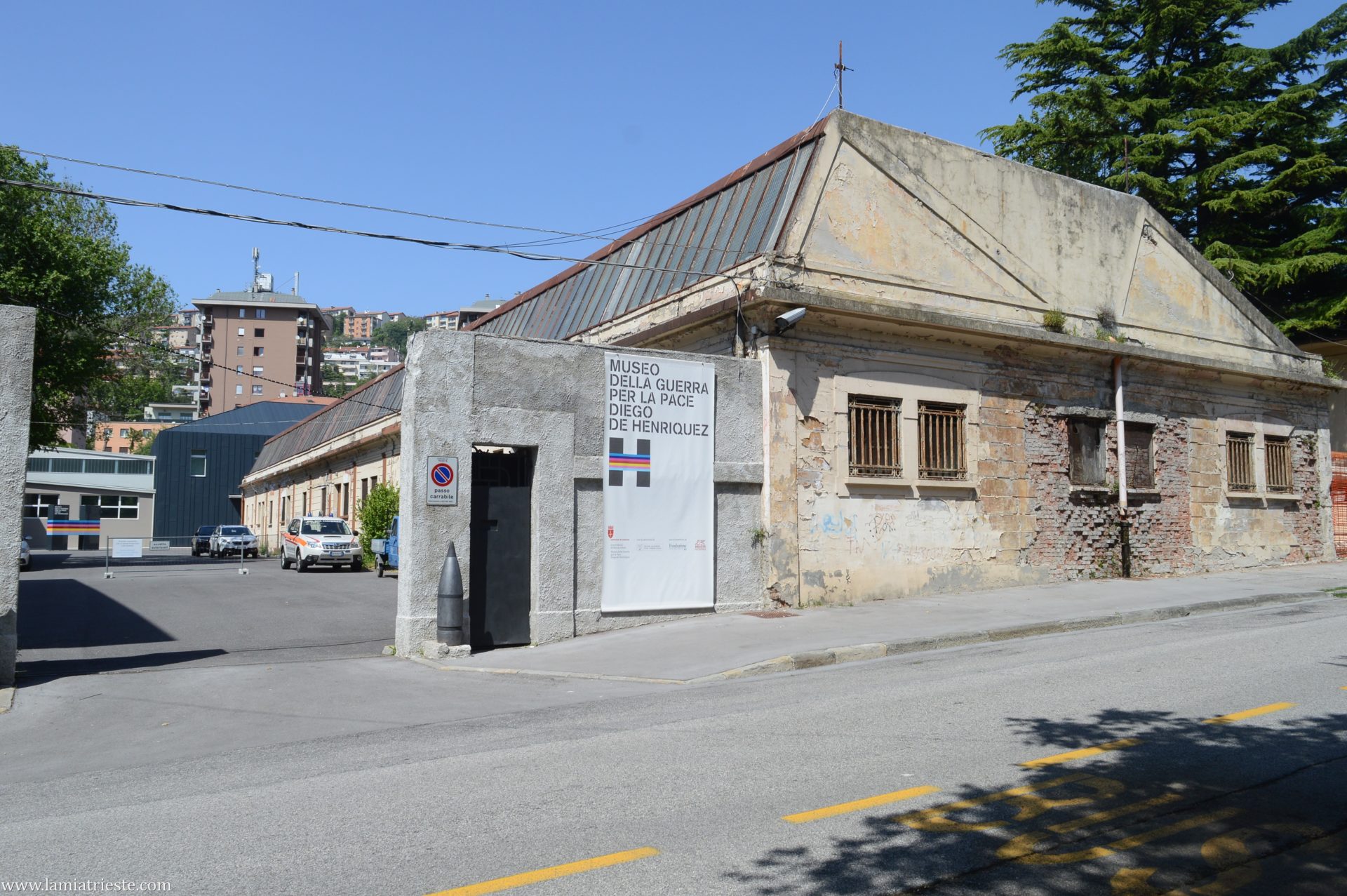
The Civic Museum of War for Peace “Diego de Henriquez” will inaugurate a new exhibition, “Border Line,” on Dec. 3 at 5 p.m., presenting a contemporary investigation into the ways societies define and treat those perceived as marginal or deviant.
Curated by the Trieste-based artist PierPaolo Koss, the exhibition is organized by the cultural association Daydreaming Project in cooperation with the City of Trieste. It forms part of a broader initiative titled “Chronocroma. Memories, Conflicts and Ecologies in Contemporary Art,” supported by the Friuli Venezia Giulia Region.
“Chronocroma” is built on an unconventional concept: the additive RGB color model — blue, red and green — is used to represent three temporal horizons of human experience. Blue symbolizes the past, red the present and green the future. Through this framework, the project explores how art can connect memory, current realities and future possibilities.
“Border Line,” associated with the color red, focuses on the present. The exhibition brings together photography, video, installations, sculpture and performance to examine the social and political construction of “otherness.” Many of the works on display come from Koss’s decades-long career, which has taken him from Italy to Russia, China, Japan and various parts of Europe after graduating from the Academy of Fine Arts in Genoa.
Koss is known for placing his work in symbolically charged locations, using art to comment on nationalism, human rights and discrimination. His practice often reflects on how ethnic, religious and cultural differences can become fault lines that threaten social cohesion. In this context, “Border Line” functions as both an aesthetic and civic gesture — a call to observe and question the narratives that shape contemporary society.
Both “Chronocroma” and “Border Line” aim to engage a broad audience, with particular attention to younger generations. Organizers hope the initiative will encourage viewers to use contemporary art as a tool for understanding issues of memory, conflict and sustainability, linking historical events with the challenges of the present and the uncertainties of the future.
These goals mirror the vision of Diego de Henriquez, the Triestine collector whose holdings form the core of the museum. De Henriquez believed that studying the violence of the 20th century could help foster a culture of peace — a principle the institution continues to promote.
“Border Line” will be on view from Dec. 4, 2025, through Jan. 25, 2026, and is included with standard museum admission.
Information
Civico Museo della Guerra per la Pace “Diego de Henriquez”
Via dei Tominz 4, 34139 Trieste
Tel. +39 040 675 4699
museodehenriquez@comune.trieste.it
museodiegodehenriquez.it