














by InTrieste
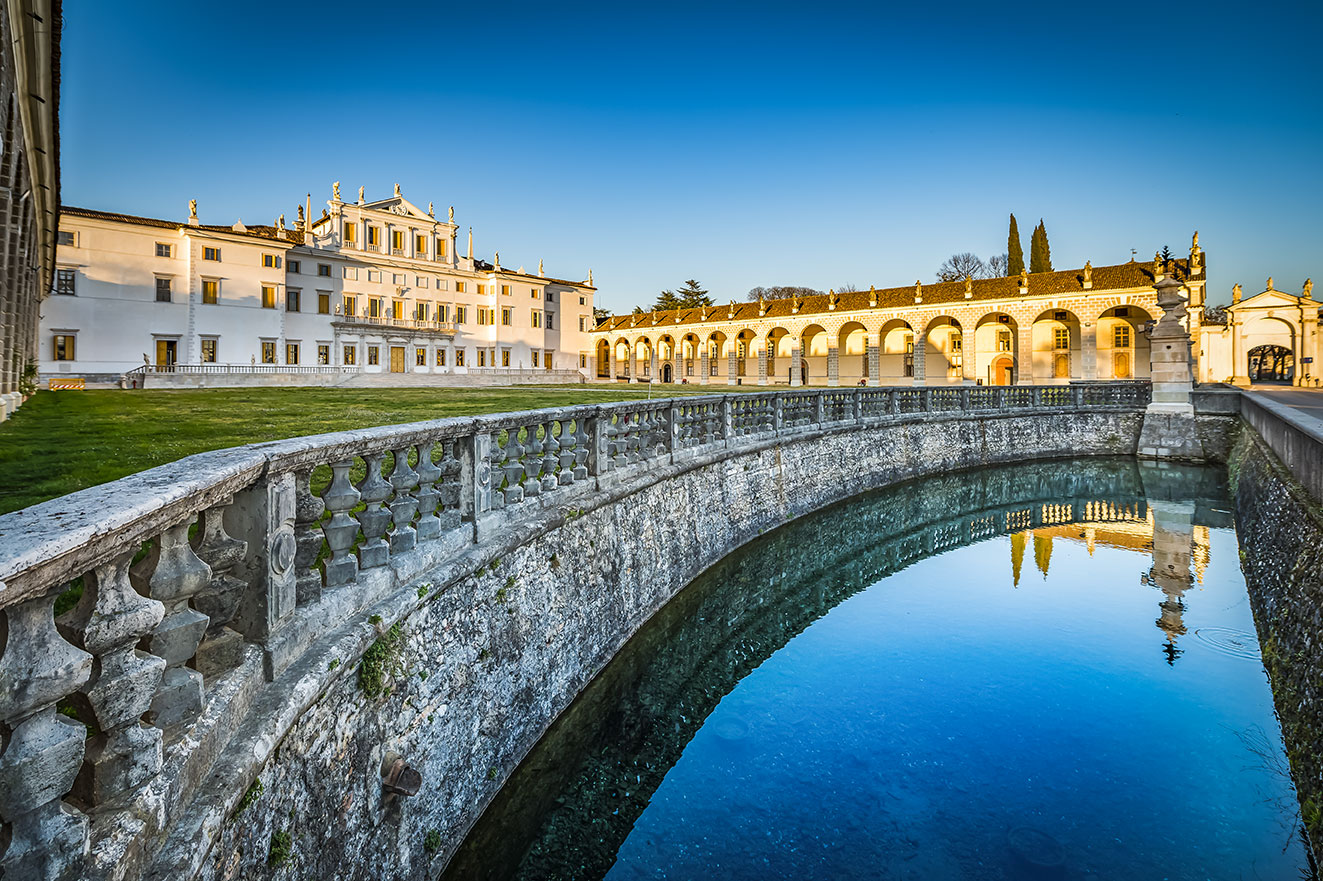
More than 10,000 people gathered on Friday evening at Villa Manin, the historic residence in Friuli Venezia Giulia, for La Notte dei Confini (“The Night of Borders”), a Christmas-season event that combined video mapping, music, spoken word and fireworks in an ambitious effort to rethink the meaning of borders through culture.
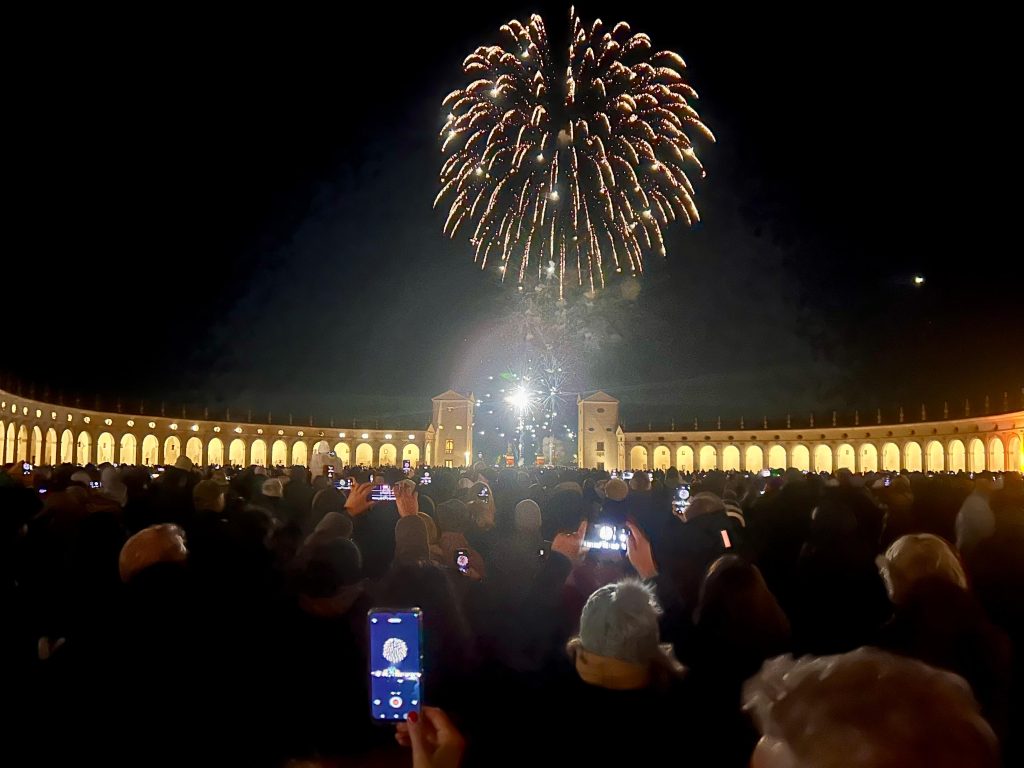
The event, which far exceeded organizers’ expectations, was designed as a dialogue between contemporary technology and the exhibition Confini. Da Gauguin a Hopper (“Borders: From Gauguin to Hopper”), currently on display inside the villa. As images from the exhibition were projected onto the building’s façade, Villa Manin itself became a vast open-air stage, blurring the line between museum and public square.
Mario Anzil, the vice governor of Friuli Venezia Giulia with responsibility for culture, described the evening as an “experiment in border culture” — an approach that treats borders not as barriers but as sources of exchange and opportunity.
“In this region, borders have always shaped who we are,” Anzil said. “But today we are trying to interpret them not as walls, but as places of encounter, relationship and possibility.”
That perspective is deeply rooted in Friuli Venezia Giulia’s history. Situated at the crossroads of Latin, Slavic and Germanic worlds, the region has long been marked by shifting frontiers and overlapping identities. The cultural policy being promoted here seeks to turn that complexity into an asset, using art and public events to foster participation and shared experiences.
For Anzil, culture is not meant to remain confined within gallery walls. “Culture is not only knowledge,” he said. “It is lived experience, personal interpretation. The goal is to allow many people, together, to have cultural experiences that are meaningful, enjoyable and even fun.”
That philosophy was visible throughout the evening. Masterworks from the Confini exhibition were symbolically “brought outside” through digital projections that interacted with the architecture of Villa Manin, reinforcing its role as a flagship of a cultural policy that blends heritage, innovation and public engagement.
The event combined modern visual technologies with more elemental forms of expression. Fireworks, live music and spoken word performances were woven into the program, including a piano performance by the composer Remo Anzovino, who both opened and closed the evening.
“This land has deep roots, but it also has wings,” Anzil said. “We are anchored in our identity, but in Friuli Venezia Giulia it is already time to look ahead.”
The vice governor thanked Erpac, the regional cultural heritage authority, along with its director general Lydia Alessio Vernì, the production company Linea d’Ombra, Marco Goldin, curator of the exhibition, and the regional association of local tourism offices, Unpli FVG, which organized the closing reception.
Above all, he credited the public. “The turnout shows that this experiment in border culture is a path worth pursuing,” he said.
For one winter evening at least, Villa Manin became not just a historic landmark but a symbolic meeting point — a place where borders were transformed, if only temporarily, into shared space.