


















by Alessandra Ressa
Deep in the limestone heart of Val Rosandra—one of Trieste’s most dramatic natural corridors—lies Grotta Martina Cucchi, a remarkably intricate maze-like cave that has long fascinated local speleologists. Considered one of the great caves of the Karst with its several kilometers in length and many more under exploration, Grotta Martina is an unusual example of the region’s subterranean character: narrow, winding, studded with small lakes, adorned with delicate concretions and punctuated by technical passages that demand both agility and experience. Its discovery and documentation by Triestine cavers, especially those of the Commissione Grotte “E. Boegan”, placed it firmly on the regional map of significant speleological sites, and it continues to inspire new generations of explorers.
The cave lies a few meters away from the bike lane Cottur, within the municipality of San Dorligo della Valle (Dolina), in the protected area of Val Rosandra. This gorge, carved by the Rosandra stream, has long been a sanctuary for hikers, climbers and cavers, and Grotta Martina occupies a discreet position in the landscape—humble at first glance, but revealing its depth only to those prepared to venture inside. The Friuli-Venezia Giulia speleological cadastre catalogues its features with precision, yet the true spirit of the cave is conveyed not in coordinates but in the stories of those who have crawled through its passages, waded through its lakes, and illuminated its dark chambers.
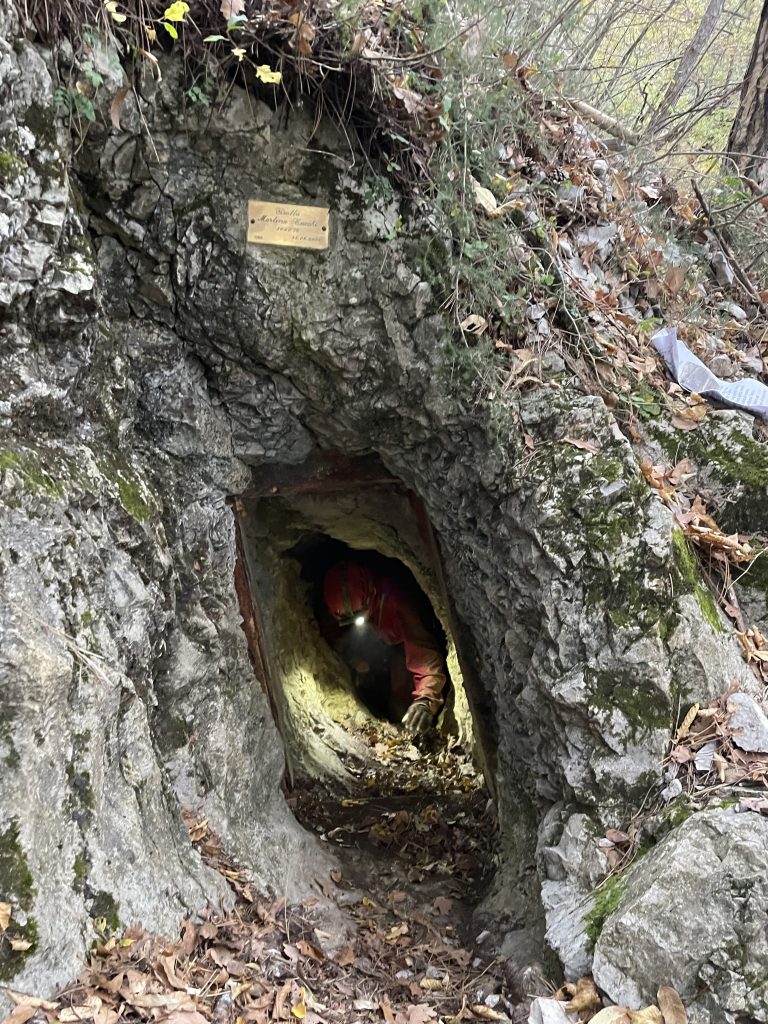
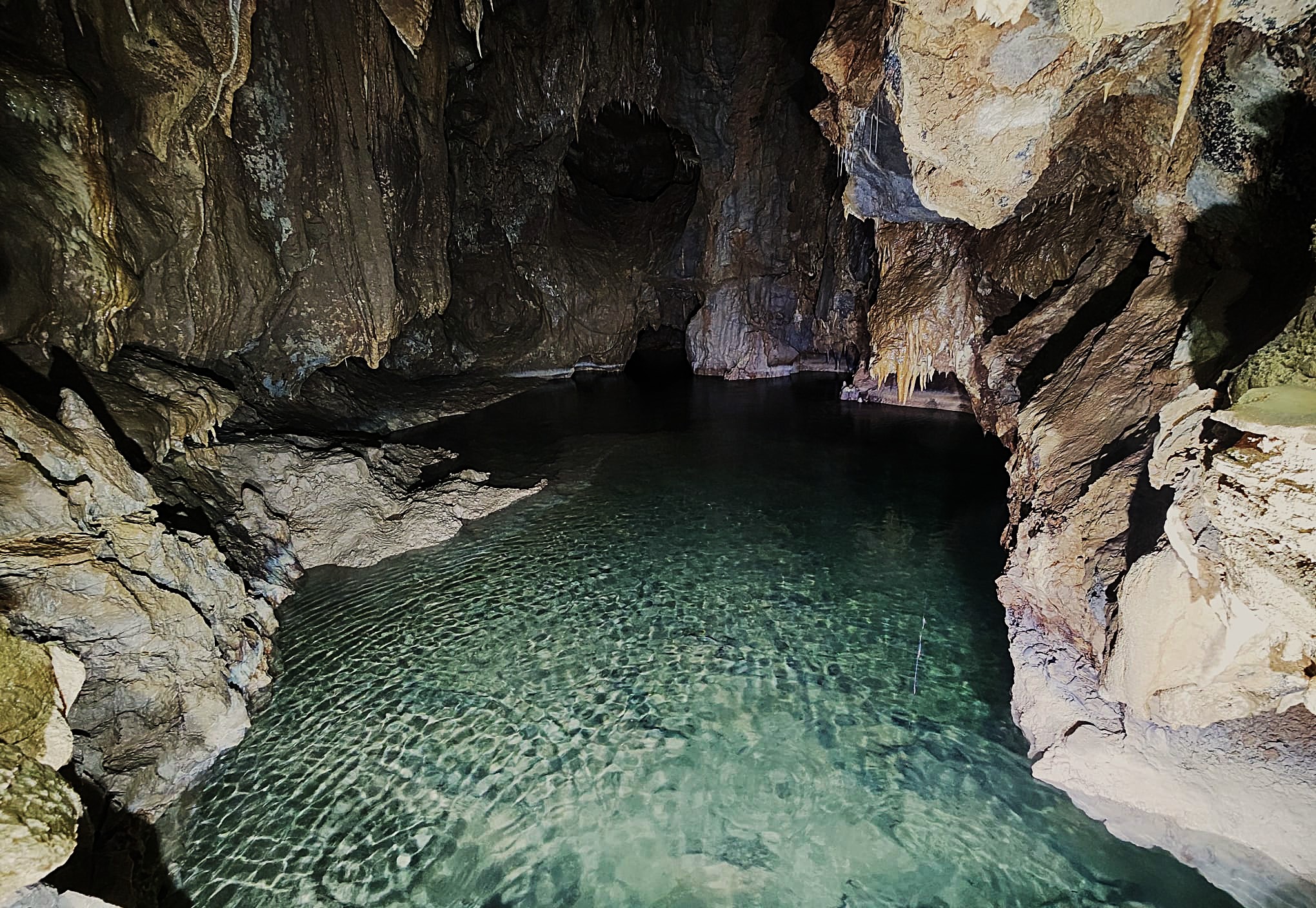
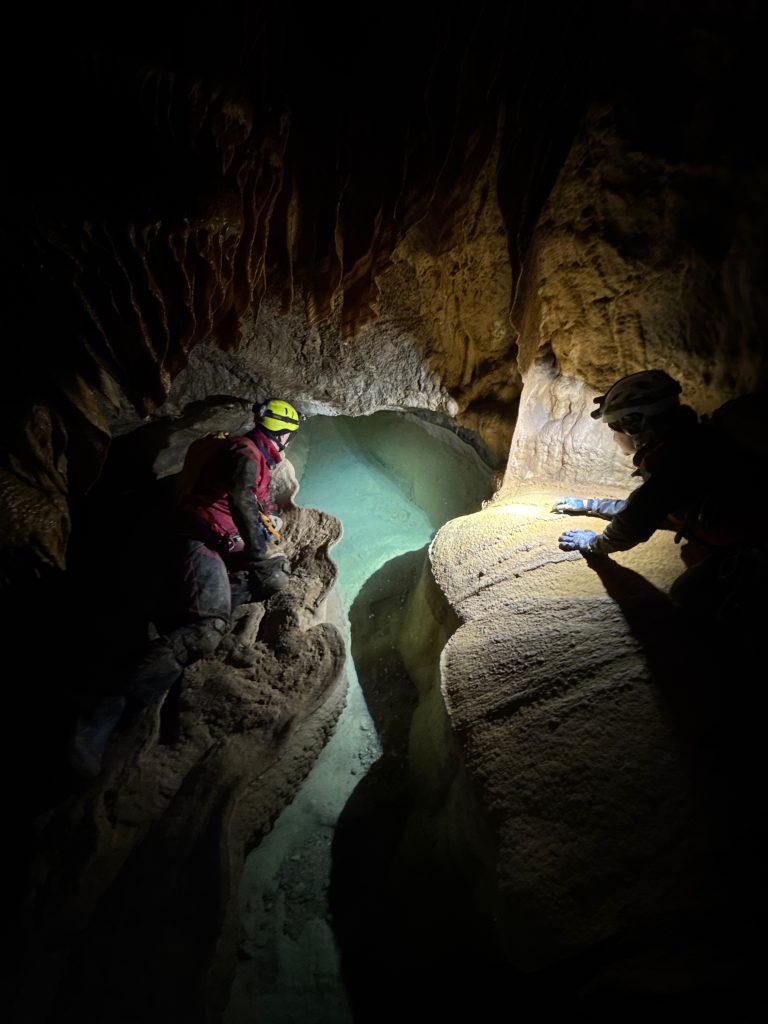
Entering Grotta Martina, the visitor first steps into a small uninviting access, an antechamber of sorts that gives no hint of what lies below. Soon, a five-meter shaft drops to a lower level where the cave begins to show its layered personality. Here one finds the narrow “Cunicolo dell’Aria,” a tight side passage that cavers mention with equal measures of amusement and exasperation. From this point onward the cave unfurls in a sequence of surprises. The most renowned of these is the series of small underground lakes— deep, reflective basins with scalloped walls and speleothems that shimmer under the beams of headlamps. These are often spoken of as the first, second, third and fourth lakes, culminating in the “sala del lago,” where stalactites, columns and fragile curtains form a tableau that feels almost theatrical.
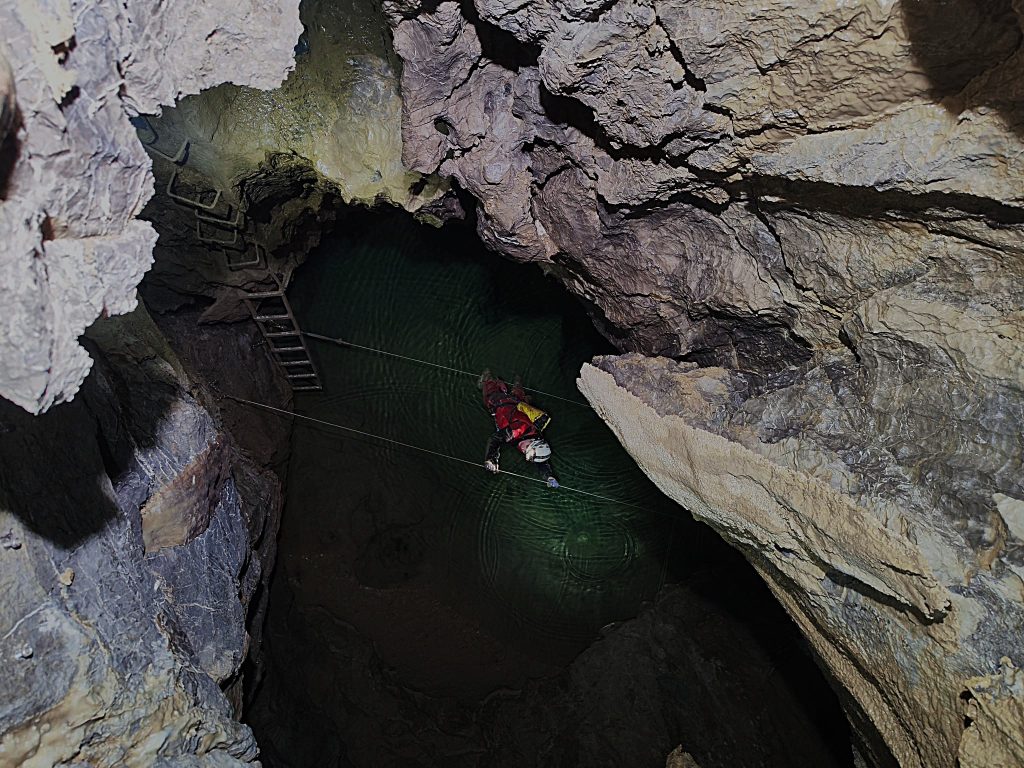
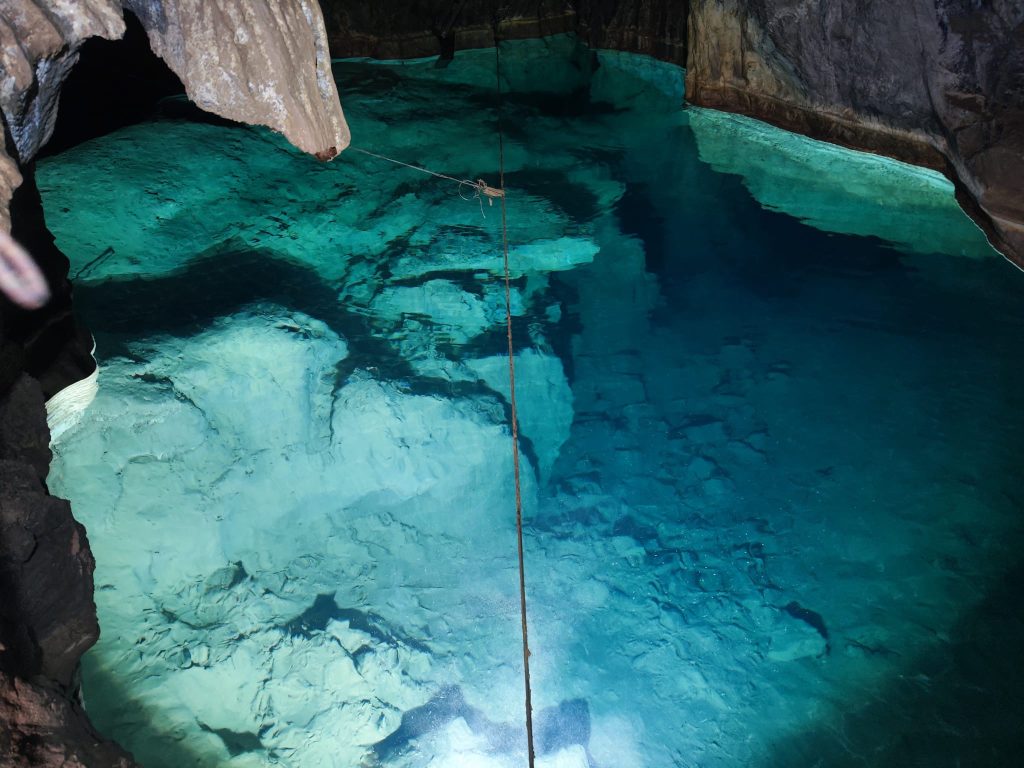
Reaching these chambers involves negotiating narrow crawls and side inlets, some opened only after patient excavation. Among the challenges, one feature has become particularly emblematic: the suspended cable passage over the first lake. This is not a dramatic descent but a short traverse above water, where two fixed parallel cables for hands and feet help cavers cross the lake. When the basin is full after rain, the maneuver becomes a delicate dance above cold, emerald water; when levels are low, one has the feeling of walking suspended in air.
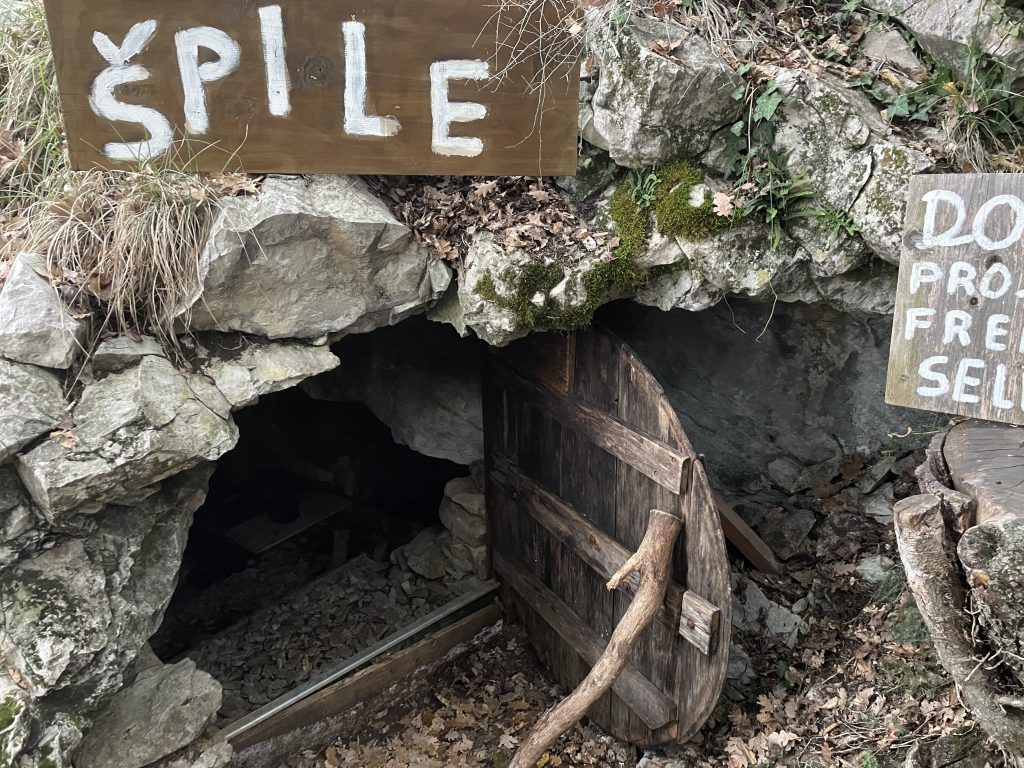
Though Grotta Martina is beautiful, it is not an easy or casual outing. It is a sport cave, and access is reserved for those equipped with helmets, technical gear and an understanding of cave safety. Cold water, tight passages and rope work demand competence. The cave may be mainly horizontal, but it is not forgiving. The tiny locked door ensures that no inexperienced person ventures inside it, and that its treasures remain preserved.
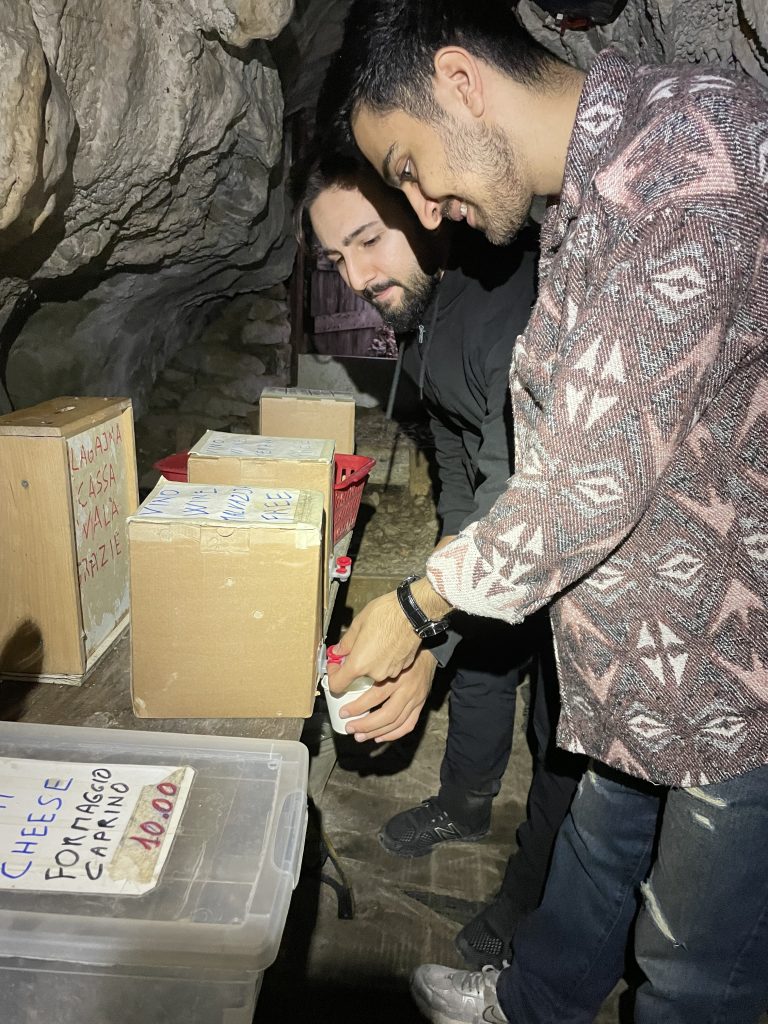
Outside, the atmosphere of Val Rosandra shifts from the silent world of the cave to the convivial life of the valley. Near the Martina Cucchi, just off the bike lane, the valley hosts another, more unusual kind of gathering spot: the Wine Cave, a natural cavern used by locals—especially university students—as an informal self-service bar. Here, amid the rocks and shadows, visitors help themselves to wine and drinks left available for communal enjoyment.
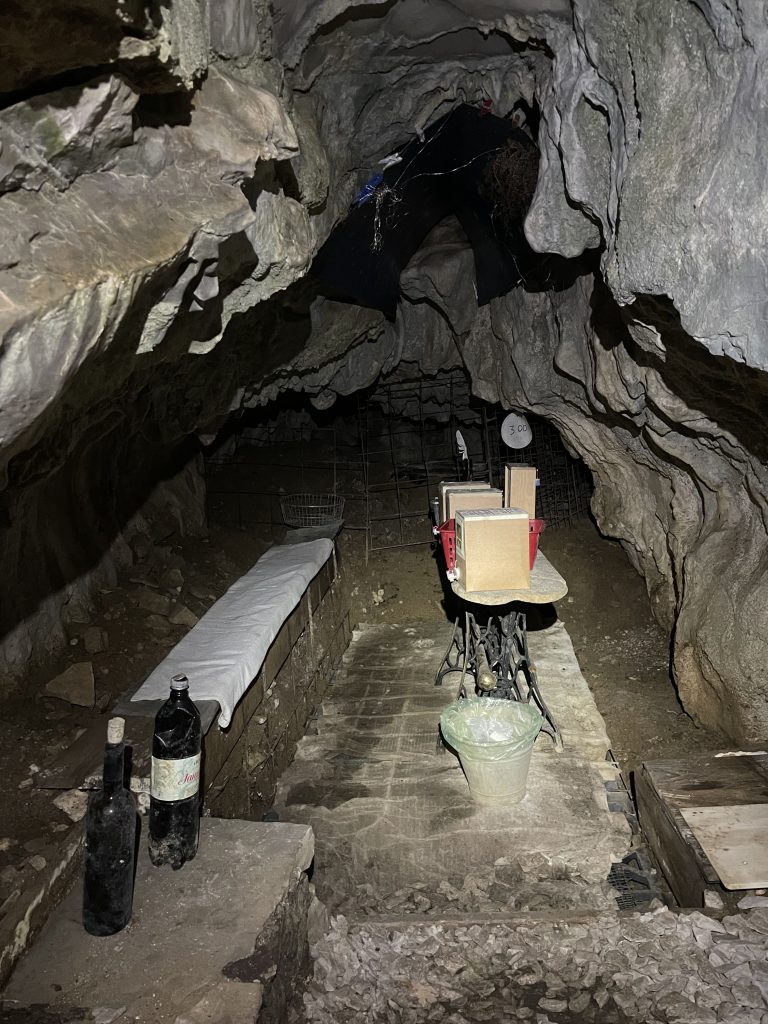
You can drink local Malvazja wine for free, or leave a small contribution for other wines and homemade apple juice. It is a place where stories are exchanged, where cavers emerging from Grotta Martina recount their adventures and where the borderless, spontaneous spirit of Trieste’s student life spills into the landscape. The contrast is striking: one cavern that demands ropes, skill and caution; another that invites conversation, music and laughter.
Adding yet another layer to Val Rosandra’s character is the presence of the caproni, the wild goats that have become a familiar sight on the steep slopes above the trails. Their origins, according to local accounts, trace back to escaped domestic goats from Slovenia, which gradually established themselves in the valley. Over the years their numbers grew, raising concerns among conservationists. The goats feed on saplings and fragile vegetation, disturb fauna and sometimes trigger small rockfalls on the karst slopes. Debates have flared over how—or whether—to control their population. Yet despite the ecological challenges they pose, many visitors regard them with affection: a herd of silhouettes perched impossibly on a limestone ridge, watching the movement of hikers below. They have, for better or worse, become part of the valley’s living identity.
In this blend of natural beauty, human tradition and ecological complexity, Grotta Martina stands as one of Val Rosandra’s quieter wonders. After a few hours underground, stepping back into the light feels like returning to a familiar neighborhood. The goats still watch from the rocks, students gather in the Cave bar, and the valley carries on with its easy rhythm.





Very interesting, thank you for the article!