





















by InTrieste
At a shipyard on Italy’s Adriatic coast, a new chapter in cruise ship design edged closer to reality on Thursday.
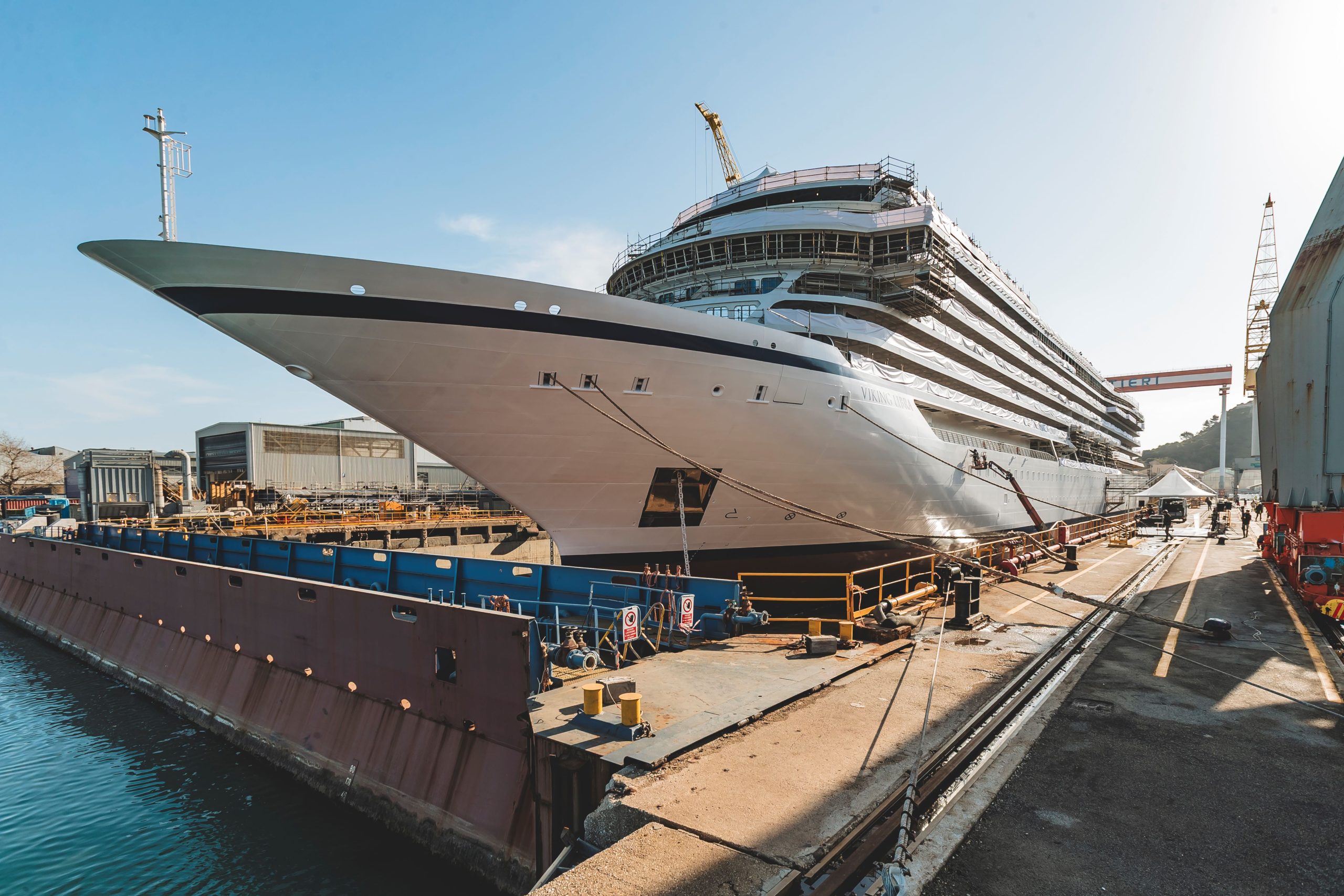
The Italian shipbuilder Fincantieri launched the Viking Libra, a vessel it says will become the world’s first hydrogen-powered cruise ship, marking a significant step in the industry’s efforts to reduce its environmental footprint.
The ship, under construction for the cruise operator Viking, was floated out at the company’s yard in Ancona during a ceremony attended by company executives and members of the Viking team. Delivery is scheduled for late 2026.
With a gross tonnage of about 54,300 tons and a length of 239 meters, the Viking Libra is designed to carry up to 998 passengers across 499 cabins. Its defining feature, however, lies below deck: a propulsion system that will rely in part on liquefied hydrogen and fuel cells, allowing the ship to operate with zero emissions under certain conditions.
If successful, the technology could enable access to environmentally sensitive areas that are increasingly restricting conventional cruise traffic because of emissions concerns.
The project reflects a broader shift within the maritime industry, which faces mounting regulatory and public pressure to decarbonize. Hydrogen, while still in the early stages of adoption at sea, is viewed by some engineers and policymakers as a promising alternative to traditional marine fuels.
Fincantieri and Viking have worked together since 2012, building a partnership that has expanded steadily over the years. Including ships already delivered, those on order and additional agreements subject to financing conditions, the two companies’ joint portfolio now totals 26 vessels.
The Ancona shipyard, where the Viking Libra was launched, is one of Fincantieri’s key production sites. Spanning roughly 360,000 square meters, it has a production capacity of 60,000 gross tons and employs about 3,700 workers. Since 2009, more than 20 ships have been delivered from the yard.
The company has also announced plans to increase production capacity at the site, alongside investments in advanced manufacturing technologies. These include automation systems, collaborative robots and the use of augmented reality and artificial intelligence, part of a broader initiative aimed at improving efficiency and working conditions.
As the Viking Libra moves toward completion, it will serve as a test case for whether hydrogen can move from experimental promise to practical solution in one of the world’s most energy-intensive forms of travel.