






by Nina Vaclavikova
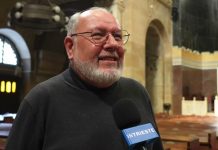
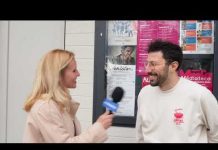
Interview: Caterina de Gavardo, Trieste City Councilor for Public Safety Policies
Local police in Trieste have intensified inspections of shops, markets and other businesses as part of an effort to protect consumers from unsafe products and unfair commercial practices, city officials said Monday.
The city’s Commercial Police Unit, a specialized branch of the municipal police, conducts checks across the municipality to ensure that goods sold to the public meet safety and labeling regulations. The unit focuses on areas ranging from food quality and toy safety to cosmetics, textiles and tobacco-related products.
Speaking at a press conference, Caterina de Gavardo, the city councilor responsible for public safety policies, said the work of the nine-officer unit requires navigating complex national and European regulations while maintaining close coordination with other institutions.
“The goal is to protect citizens — the final consumers — who may unknowingly purchase products that are unsafe or potentially harmful,” she said.
The unit operates largely in plain clothes and conducts inspections in retail shops, restaurants and nightlife venues, as well as at public markets and major events. Its responsibilities also extend to taxi and private-hire transport services, tourist guides, public-space permits and accommodations.
According to city officials, toy safety has been a major focus. Inspectors check for compliance with the European Union’s “CE” safety mark, which indicates that a product meets E.U. standards. Officials warn that the mark is sometimes confused with a similar-looking symbol associated with exports from China.
Authorities reported seizing 755 noncompliant toys in 2024 and 850 in 2025. In the first months of 2026 alone, 88 toys have already been confiscated. Seized items are sent to the local chamber of commerce and may ultimately be destroyed.
Food safety inspections are another key area of activity. Regulations require clear traceability, labeling in Italian and the identification of allergens in bold print. In the first two months of 2026, police carried out 228 food-related seizures. The products are forwarded to a national authority under the Ministry of Agriculture for further evaluation.
More recently, inspections have expanded to the cosmetics sector, where European regulations have tightened in recent years. Since September 2025, for example, nail products containing the chemical TPO have been banned. Authorities reported more than 1,000 cosmetic-related seizures in 2025.
Police also monitor textile labeling, ensuring that garments display the composition of materials in Italian, and enforce restrictions on the sale of tobacco accessories to minors.
Depending on the violation, enforcement measures can include administrative fines, temporary closure of businesses, confiscation or destruction of goods, and, in some cases, criminal proceedings.
Pierluigi Marchetti, the deputy commissioner who leads the Commercial Police Unit, emphasized that consumer awareness plays an important role alongside enforcement.
“Before anything else, we are consumers ourselves,” he said. “Our choices have a direct impact on health and safety.”
Meghi Callegaris, a municipal police officer who works on product inspections, said authorities have recently concentrated on cosmetics compliance with European regulations, including the removal of banned substances such as lilial, prohibited since 2022 because of concerns about reproductive health.
Recent inspections have not detected the banned chemicals in local products, she said, suggesting that businesses have largely complied with the rules.
Officials said the unit’s work often goes unnoticed but remains essential for both consumer safety and fair competition among businesses.