
















by Maximiliano Crocamo
Interviews: Massimiliano Fedriga, Governor of Friuli Venezia Giulia; Boris Johnson, journalist and former Prime Minister of the United Kingdom
At a moment of mounting global tension, Boris Johnson arrived in Trieste with a characteristically forceful message: the West, he warned, risks undermining itself through division just as geopolitical stakes intensify.
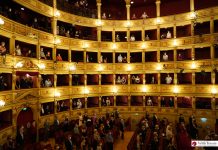
Speaking onstage at the Politeama Rossetti, Johnson headlined the Link Media Festival, an annual gathering organized by NEM that convenes more than seventy Italian and international journalists, analysts, and public figures. The discussion ranged widely, but focused squarely on the shifting balance of power in the Middle East and the ongoing war in Ukraine.
Johnson did not mince words. He described the United States’ recent military action against Iran as a “strategic blunder,” arguing that Washington had failed to anticipate the potential closure of the Strait of Hormuz, one of the world’s most vital shipping corridors. Such a miscalculation, he suggested, could reverberate far beyond the region, disrupting global trade and energy markets.
At the same time, Johnson characterized Iran as a “ruthless regime,” framing the crisis as part of a broader contest among global powers. In his view, the greatest beneficiary of Western discord is Vladimir Putin, whom he described as an ally of Tehran and a figure eager to exploit fractures among democratic nations.
Yet even as he criticized Washington’s actions, Johnson struck a conciliatory note toward transatlantic unity. Public disagreements among Western leaders, he argued, risk weakening the collective position of democratic governments. Instead, he urged allies to rally behind the United States—particularly if it succeeds in advancing a resolution to the war in Ukraine.
The conversation was moderated by Marco Zatterin, an editorialist for NEM, and introduced by Massimiliano Fedrigaalongside Marco Varvello, a scientific advisor to the Institute for International Affairs.
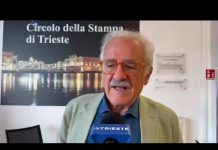
Fedriga framed Johnson as a speaker who brings both authority and unpredictability, citing his varied career as a journalist, Mayor of London, Foreign Secretary, and Prime Minister. In times of conflict, the governor noted, information itself becomes contested terrain, with governments shaping narratives as much as policies. For regional leaders like himself, he added, such conditions make independent analysis especially valuable.
While acknowledging that local institutions have limited influence over international crises, Fedriga emphasized their responsibility closer to home: supporting businesses, workers, and communities navigating the economic ripple effects of global instability.