

















by InTrieste
The Friuli Venezia Giulia region has introduced an advanced new phase of its helicopter emergency medical service, enabling complex nighttime rescue operations in remote and inaccessible terrain, regional officials announced Tuesday.
The upgrade, known as “Phase 3,” allows crews to carry out hoist rescues in flight after dark, making it possible to reach patients in mountainous or densely wooded areas where helicopters cannot land. The system has been operational since March 14.
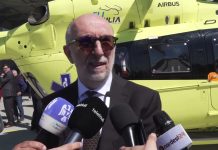
“This marks a significant step forward in citizen safety,” said Riccardo Riccardi, the regional councillor for health and civil protection, speaking at a presentation held at the helicopter base in Pasian di Prato. He described the development as the result of years of technological and organizational progress that has accelerated in recent times, producing what he called one of the most advanced emergency systems in Italy.
The service operates around the clock and is integrated into the region’s broader emergency response network, working alongside ground ambulances. It is coordinated from the regional operations center in Palmanova, in collaboration with alpine rescue teams and the regional health authority.
Officials said the expansion reflects both improved training and new operational procedures. The system now includes about 250 designated landing sites across the region, up from just 12 in its initial phase, with a significant concentration in mountainous areas.
The helicopter service carries out roughly 1,200 missions annually, about 40 percent of them in alpine environments. These include on-site emergency responses, specialized hoist operations in difficult terrain, and urgent transfers between hospitals.
Two helicopters are stationed at the Pasian di Prato base. One is dedicated to full emergency operations, including night flights with a specialized medical crew. The second supports inter-hospital transfers, large-scale emergency events, and serves as backup during maintenance periods, while also assisting civil protection efforts such as search and rescue missions.
During the event, Riccardi emphasized the importance of continued investment in both technology and personnel, noting that emergency responders often operate under unpredictable and high-risk conditions. He also called for clearer legal protections for those working in such environments, arguing that the burden of responsibility in urgent situations should not discourage service.
“The value of human capital is fundamental to a resilient community,” he said.