














video: Maximiliano Crocamo
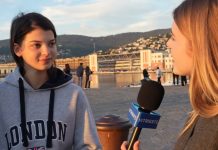
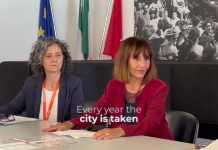
Interview: Cristina Amirante, FVG Councilor for Infrastructure and Territory
In a region increasingly investing in sustainable mobility, a short but strategic stretch of former railway has been reborn as part of a growing cycling network in Friuli Venezia Giulia.
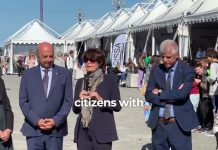
Local and regional officials on Thursday inaugurated a new segment of the FVG2 cycleway, a 400-meter path built along the disused Fincantieri railway line. Though modest in length, the project represents a broader effort to connect communities, encourage alternative transportation and expand tourism infrastructure across the region.
“This is not just about building a path,” said Cristina Amirante, the regional councillor for infrastructure and territory, speaking at the opening. “It’s about restoring an abandoned space and turning it into something that supports daily life — from commuting to school and work to tourism.”
The new section runs from the boundary with Monfalcone to Via Staranzano, completing a link with an earlier phase of the project opened in 2025. Together, the two segments strengthen a cycling corridor in the Monfalcone area, where neighboring towns form a nearly continuous urban landscape.
The redevelopment, which cost about €510,000, is part of a larger €1.7 million investment in Ronchi dei Legionari. The former rail bed has been converted into a paved cycling and pedestrian path using permeable, colored asphalt, with LED lighting, rest areas and landscaped greenery, including rows of oleanders.
Officials say the route serves a dual purpose: improving everyday mobility for residents while also fitting into a longer-distance cycling itinerary that connects the Veneto region to Trieste.
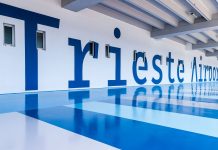
A key element of the project is its connection to Trieste Airport, located nearby. Regional authorities plan to open an additional stretch that will extend directly into the airport grounds, making it the only airport in Italy integrated into a regional cycling network.
The initiative stems from a 2022 agreement between the region, the municipalities of Monfalcone, Ronchi dei Legionari and Staranzano, and the airport authority, with the goal of strengthening links between bicycles, trains, buses and cars.
Construction began in September 2025 and was completed in early March, ahead of schedule.
Further work is already planned. Officials say the next phase will complete another portion of the same route and advance the development of the “Tri-Livenza” cycleway, a longer project intended to connect the coastal destinations of Lignano and Cervignano — part of a strategy to make cycling an increasingly viable and attractive option for both residents and visitors in Friuli Venezia Giulia.